In the fast-paced warehousing and logistics industry of 2026, choosing the right pallet racking system is one of the most important decisions affecting storage capacity, operational efficiency, picking speed, labor costs, and overall profitability. Warehouse operators frequently compare double deep racking and single deep selective pallet racking when planning new facilities or upgrading existing ones. This comprehensive guide provides an in-depth analysis of double deep racking system, double deep warehouse racking, double deep selective racking, and traditional single deep pallet racking, covering every critical aspect to help you choose the best racking system for your operation.
Why the Comparison Between Double Deep Racking and Single Deep Selective Pallet Racking Matters
The global warehousing sector is under continuous pressure to increase storage density, reduce operating costs, improve order fulfillment speed, and adapt to e-commerce growth, labor shortages, and automation trends. Single deep selective pallet racking has traditionally been the default choice for flexibility, while double deep racking has become increasingly popular for its superior space-saving capabilities. Understanding the detailed differences between double deep racking system and single deep pallet racking is essential for distribution centers, fulfillment warehouses, cold storage facilities, manufacturing plants, and third-party logistics providers.
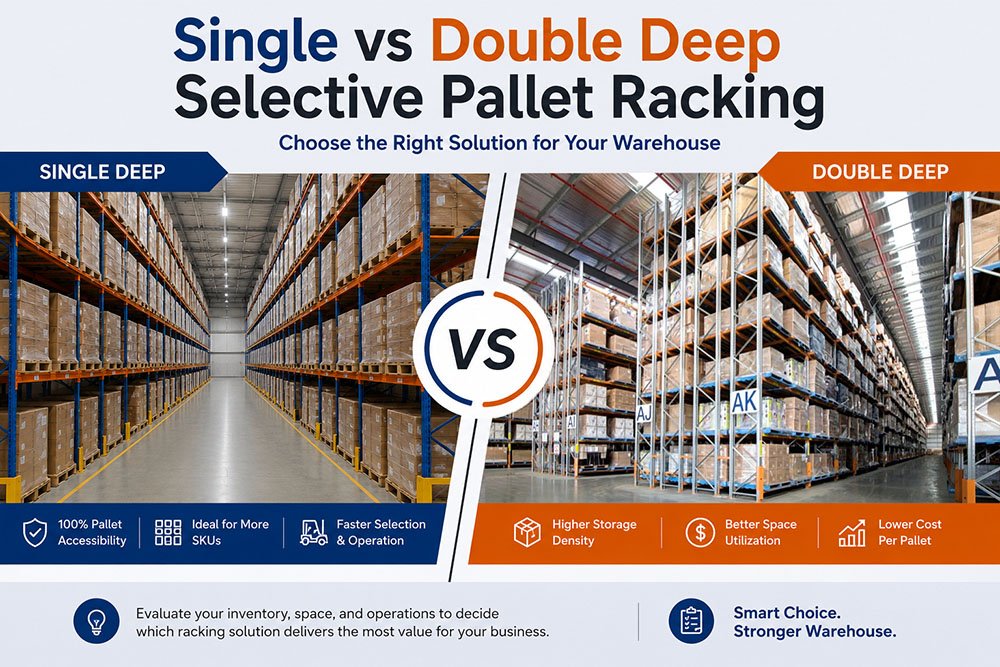
This guide examines both systems from multiple angles — structural design, storage density, accessibility, equipment requirements, inventory management, safety, cost, and long-term scalability — to provide you with clear, actionable insights.
What is Single Deep Selective Pallet Racking?
Single deep selective pallet racking is the most common and versatile warehouse racking system used worldwide. In this configuration, each pallet is stored only one position deep from the operating aisle. This design allows forklift operators to access any individual pallet directly without moving other pallets in front of it.
The basic structure of single deep pallet racking consists of vertical upright frames, horizontal load beams, beam connectors (teardrop, bolted, or hook types), base plates, row spacers, and safety components. Bays are typically designed to hold standard Euro pallets or GMA pallets, with beam levels ranging from 4 to 8 levels depending on building clear height and forklift reach capabilities.
One of the greatest strengths of single deep selective pallet racking is 100% selectivity. Every pallet position is immediately accessible at any time. This feature makes it ideal for warehouses with high SKU variety, frequent picking activities, and strict inventory rotation requirements. The system supports excellent FIFO (First In, First Out) inventory management, which is critical for industries handling perishable goods, pharmaceuticals, food and beverage, cosmetics, and electronics.
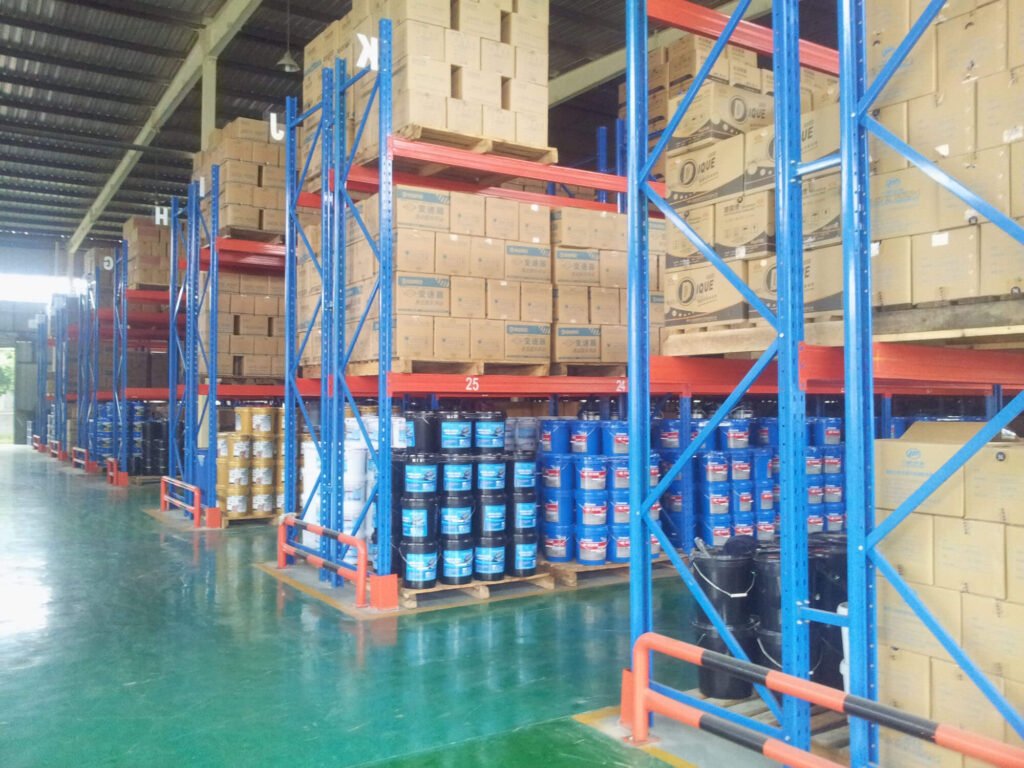
Additional advantages of single deep pallet racking include:
- Fast put-away and retrieval speeds
- High inventory visibility and easy cycle counting
- Lower risk of product damage due to minimal handling
- Compatibility with standard counterbalance forklifts and most reach trucks
- Simple installation, adjustment, and future reconfiguration
- Excellent adaptability to seasonal demand fluctuations and changing product mixes
- Strong safety profile due to direct visibility of all loads
However, single deep selective pallet racking has limitations in storage density. Because only one pallet is stored per lane from the aisle, more floor space must be dedicated to aisles, resulting in lower overall pallet positions per square meter compared to denser systems. This can lead to higher building or rental costs per stored pallet, especially in high-rent urban or refrigerated warehouses.
Typical applications for single deep pallet racking include e-commerce fulfillment centers, retail distribution hubs, spare parts warehouses, pharmaceutical distribution, reverse logistics operations, and high-velocity forward picking zones.
What is Double Deep Racking System?
Double deep racking, also commonly referred to as double deep warehouse racking or double deep selective racking, stores two pallets in depth within the same lane. The front pallet must be removed before the rear pallet can be accessed. This configuration effectively doubles the storage depth compared to single deep systems while maintaining the selective racking framework.
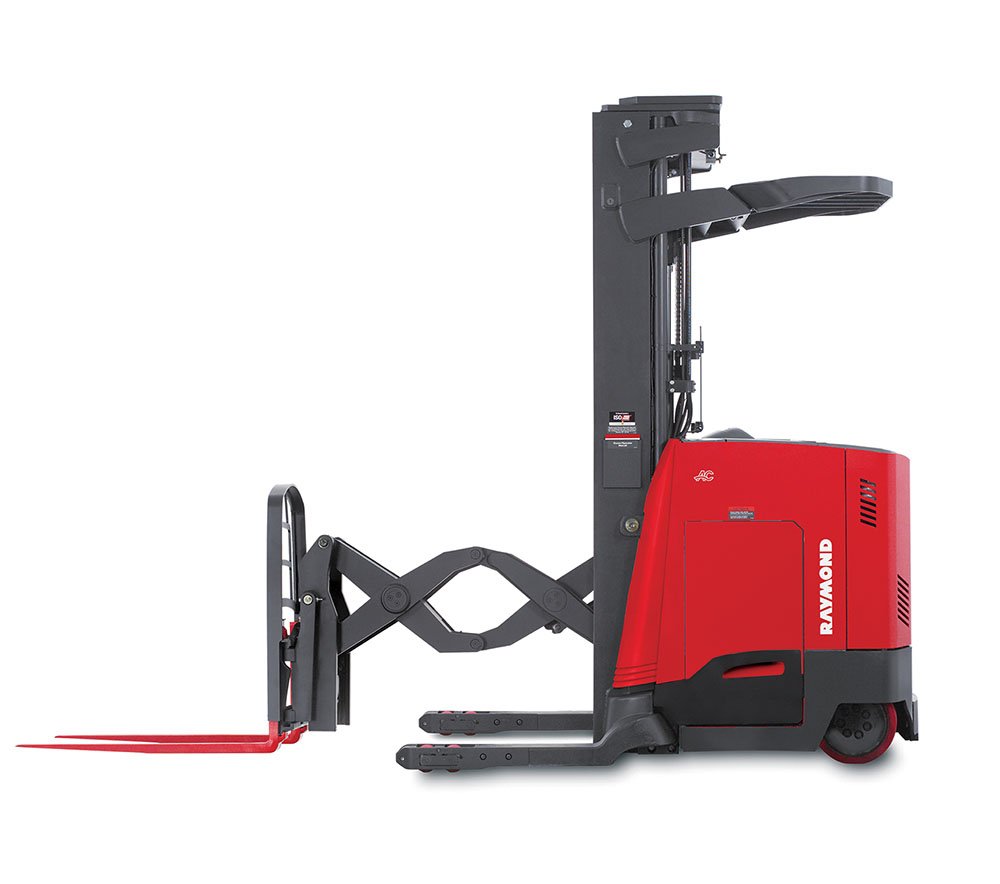
In a double deep racking system, the rack depth is extended to accommodate two standard pallets (usually 1000–1200mm each) plus necessary clearance (typically 150–200mm). Specialized deep-reach forklifts with extended forks or pantograph mechanisms are required to reach the rear pallet safely and efficiently.
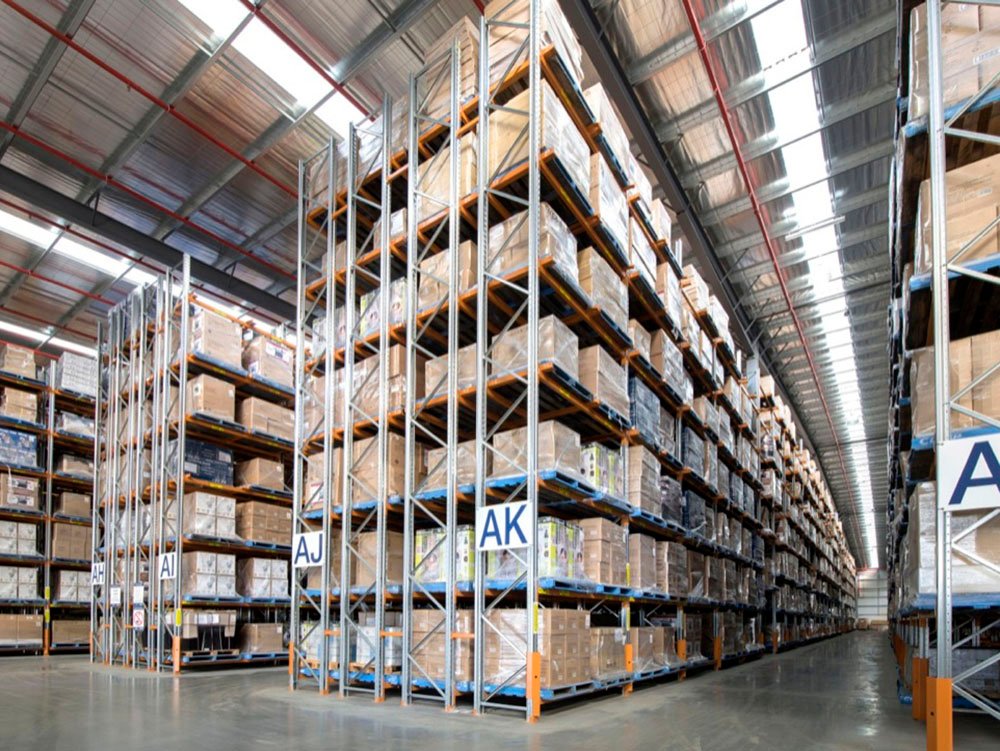
The primary advantage of double deep selective racking is significantly higher storage density. In many warehouse layouts, implementing double deep warehouse racking can increase pallet capacity by 40% to 65% within the same floor area compared to traditional single deep pallet racking. This density improvement can delay or eliminate the need for expensive warehouse expansions and reduces the total number of aisles required.
Other benefits of double deep racking include lower cost per pallet position, better utilization of vertical space, and improved operational efficiency in reserve storage areas. However, the system sacrifices some selectivity — only 50% of pallets are immediately accessible — and tends to follow a more LIFO (Last In, First Out) inventory pattern.
Double deep racking system performs best when inventory consists of relatively uniform products, slower-moving SKUs, or bulk reserve stock where full immediate access to every pallet is not required on a daily basis.
Core Design and Structural Differences
Both double deep racking and single deep selective pallet racking use high-strength cold-formed steel uprights and beams, but their engineering requirements differ substantially due to load distribution patterns.
In single deep pallet storage racking, loads are more evenly distributed and easier to calculate. In double deep warehouse racking, the possibility of uneven loading between front and rear positions creates additional stress on upright frames, beams, and connectors. This requires stronger structural design, more robust bracing, and careful Finite Element Analysis (FEA) validation.
Beam lengths, connector capacities, and flue space requirements also vary between the two systems. Professional engineering review is strongly recommended before implementing a double deep racking system.
Space Utilization and Storage Density Comparison
Double deep racking system significantly outperforms single deep selective pallet racking in terms of pure storage density. By doubling the depth, warehouses can store many more pallets per square meter of floor space. Detailed 3D layout simulations frequently show capacity gains of 45–65%, depending on factors such as aisle width, pallet uniformity, building clear height, and forklift turning radius.
Single deep pallet racking requires wider aisle networks to maintain full selectivity, which reduces the percentage of floor space available for actual storage. While this results in lower density, it provides operational advantages that density-focused double deep warehouse racking cannot match.
In high-ceiling warehouses (over 8 meters clear height), the density advantage of double deep selective racking becomes even more pronounced, allowing operators to maximize expensive cubic volume effectively.
Accessibility, Selectivity, and Operational Impact
Single deep selective pallet racking offers 100% selectivity, enabling operators to access any pallet instantly. This leads to faster picking speeds, higher productivity, and better support for multi-SKU operations. In contrast, double deep racking provides only 50% immediate selectivity, as rear pallets are blocked until front pallets are moved.
This difference has major implications for order fulfillment speed, labor requirements, and inventory management strategies. Warehouses with very high turnover rates usually favor single deep pallet racking, while those with more stable bulk inventory lean toward double deep warehouse racking.
Cost Analysis: Double Deep Racking vs Single Deep Selective Pallet Racking
When comparing double deep racking and single deep selective pallet racking, a full cost analysis is essential. Although double deep racking system often has a higher initial material cost due to deeper beams, stronger uprights, and specialized connectors, it typically delivers a significantly lower cost per pallet position because of its superior storage density.
Single deep pallet racking generally has lower upfront racking costs per bay. However, because it requires more aisles and larger floor space to achieve the same number of pallet positions, the overall project cost — including building rental, flooring, lighting, heating/cooling, and fire protection — can be substantially higher.
Key cost factors to consider include:
- Racking material and installation
- Specialized deep-reach forklift investment and maintenance (for double deep warehouse racking)
- Warehouse footprint and rental/ownership expenses
- Labor productivity and operational efficiency
- Energy consumption (especially important in cold storage)
- Future reconfiguration and expansion costs
In many real-world scenarios, warehouses that switch to double deep selective racking in reserve areas achieve a return on investment within 12–24 months through increased capacity and reduced space requirements.
Safety, Compliance, and Risk Management
Safety is paramount in both double deep racking and single deep selective pallet racking. Both systems must comply with international standards such as EN 15512, FEM 10.2, AS 4084, and local building regulations.
Double deep warehouse racking presents additional safety considerations due to deeper reach requirements and potential uneven loading. Important safety measures include:
- High-quality beam safety locks on every beam level
- Robust column protectors and end-of-aisle guards
- Clear load capacity signage for both front and rear positions
- Specialized operator training for deep-reach trucks
- Regular professional structural inspections (at least twice per year)
- Proper flue spacing and pallet support designs
Single deep pallet racking offers better visibility and generally fewer handling-related risks, but still requires strict adherence to load limits and safety protocols.
Automation Integration and Future-Proofing in 2026
Both systems can be integrated with modern automation technologies, but their compatibility differs:
Single deep selective pallet racking integrates seamlessly with traditional AS/RS stacker cranes, automated reach trucks, and high-selectivity shuttle systems. It is ideal for operations requiring full access to every pallet in an automated environment.
Double deep racking system pairs excellently with radio shuttle carriers, deep-lane automated shuttles, and hybrid automation solutions. It offers outstanding storage density in semi-automated or fully automated warehouses, helping maximize ROI on automation investments.
In 2026, many advanced warehouses adopt hybrid models: using single deep pallet racking in high-velocity picking zones and double deep warehouse racking in reserve storage areas, all managed by sophisticated Warehouse Management Systems (WMS).
Industry-Specific Applications and Real-World Performance
E-commerce and Retail Distribution Centers High-SKU, high-velocity operations usually prefer single deep selective pallet racking in forward picking areas, while using double deep racking for bulk reserve storage to maximize capacity.
Cold Storage and Frozen Warehouses Double deep warehouse racking is extremely popular in cold chain facilities because it dramatically reduces the cubic volume that needs to be refrigerated, lowering energy costs significantly.
Manufacturing and Raw Material Storage Double deep selective racking performs very well for storing bulk raw materials, components, and work-in-progress inventory with predictable consumption patterns.
Food & Beverage Industry Careful zoning strategies are used — combining single deep pallet racking for fast-moving and perishable items with double deep racking system for stable bulk products while maintaining FIFO discipline where required.
Pharmaceutical and Healthcare Logistics Strict traceability and FIFO requirements often favor single deep selective pallet racking, though double deep racking can be used in reserve areas with proper inventory controls.
Hybrid Solutions: Combining Double Deep and Single Deep Racking
Many successful modern warehouses no longer choose one system exclusively. Instead, they implement hybrid designs: using single deep selective pallet racking in high-turnover forward areas and double deep warehouse racking in reserve or bulk storage zones. This balanced approach delivers the best of both worlds — maximum flexibility where needed and superior density where possible.
Best Practices for Choosing and Implementing the Right System
1. Perform a detailed inventory analysis (ABC classification, velocity, pallet uniformity, turnover rates).
2. Use professional 3D warehouse simulation software to compare layouts.
3. Conduct structural engineering reviews and load calculations.
4. Consider current and future automation plans.
5. Budget for proper operator training and ongoing maintenance.
6. Plan for scalability and potential future reconfiguration.
Conclusion: Which System Should You Choose?
Double deep racking and single deep selective pallet racking each serve different operational priorities. Single deep pallet racking excels in flexibility, accessibility, and high-velocity environments, while double deep racking system delivers superior storage density and better cost efficiency per pallet in suitable applications.
The best choice depends on your specific inventory profile, throughput requirements, available equipment, building constraints, and long-term business strategy. Many leading warehouses achieve optimal results through hybrid implementations of both double deep warehouse racking and single deep selective pallet racking.
For expert consultation, free 3D warehouse layout design, professional structural analysis, and high-quality manufacturing of both systems, visit Gieantech today. Our experienced team specializes in helping warehouse operators implement the most efficient and cost-effective racking solutions tailored to their unique needs.