Inventory rotation determines which product leaves the warehouse first, and that single decision shapes labor productivity, storage utilization, waste levels, and regulatory compliance. Warehouse operators evaluating FIFO vs LIFO vs FEFO are not simply choosing an accounting convention — they are defining how the entire facility moves, how slotting is designed, and how warehouse management software directs daily picking activity.

Choosing the right method requires aligning product characteristics, industry requirements, warehouse layout, and operational priorities. This guide explains each method, compares their operational impact on warehouse management performance, and provides a structured framework to support warehouse planning decisions.
What Is a Warehouse Inventory Rotation Method?
A warehouse inventory rotation method is a structured rule that determines the sequence in which stored products are picked, dispatched, or consumed. The selected method directly influences storage layout, picking workflows, shelf-life management, and inventory accuracy across the supply chain.
The three primary inventory rotation methods used in warehouse operations are:
- FIFO — First In, First Out
- LIFO — Last In, First Out
- FEFO — First Expired, First Out
Each method follows a different decision logic, supports different product categories, and requires different levels of system sophistication. Selecting the appropriate method is a core component of warehouse planning and influences long-term operational efficiency.
FIFO (First In, First Out) Explained
Under FIFO, inventory received earliest is dispatched first. If a pallet of dry goods arrives on Day 1 and another arrives on Day 5, the Day 1 pallet ships before Day 5 — regardless of where it is physically located in the racking system.
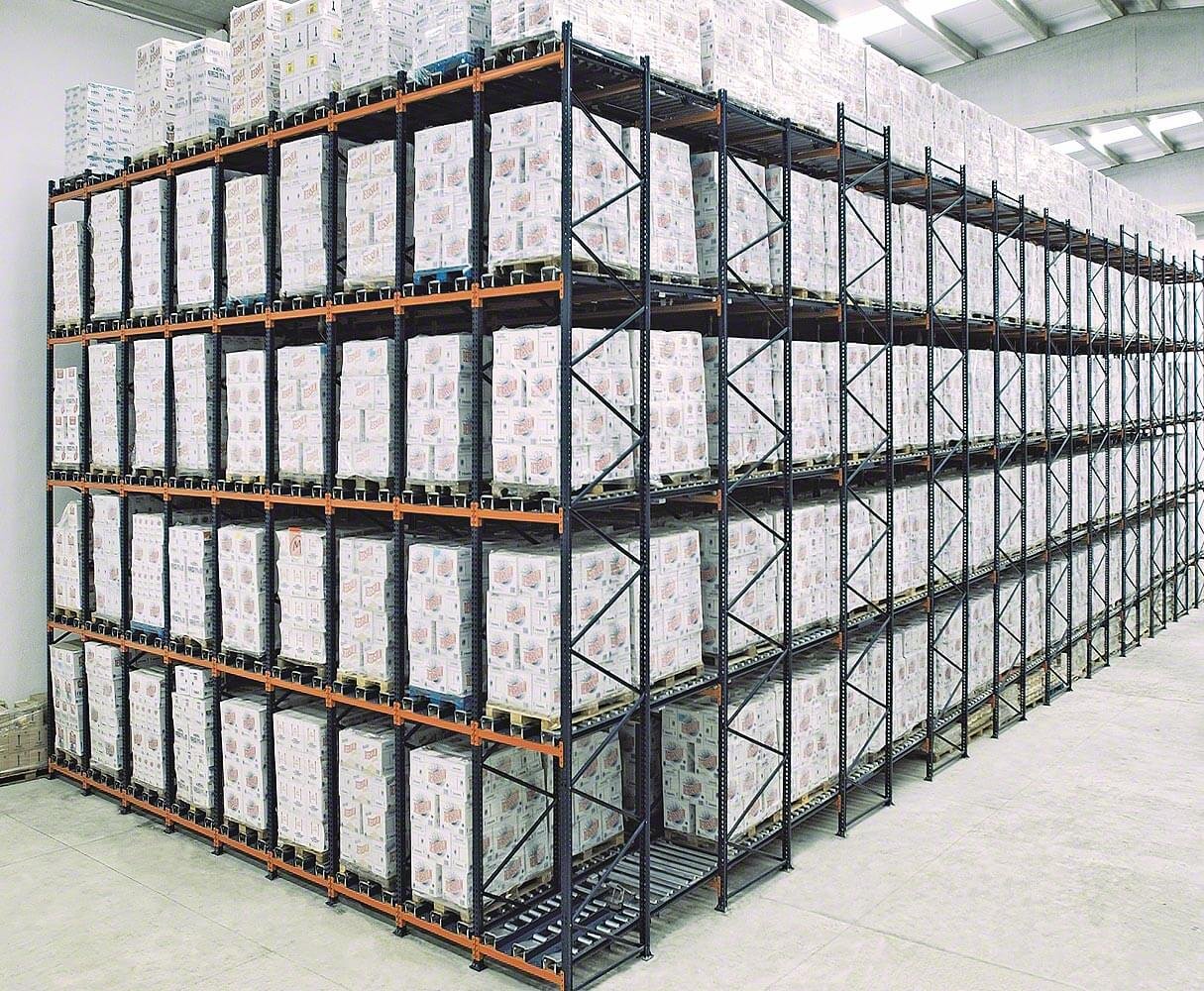
Key operational characteristics:
- Prevents aging inventory from accumulating
- Reduces obsolescence risk for time-sensitive goods
- Aligns naturally with most warehouse layouts
- Supported by selective pallet racking, pallet flow racking, and push-back racking
- Requires accurate receipt date capture at goods-in
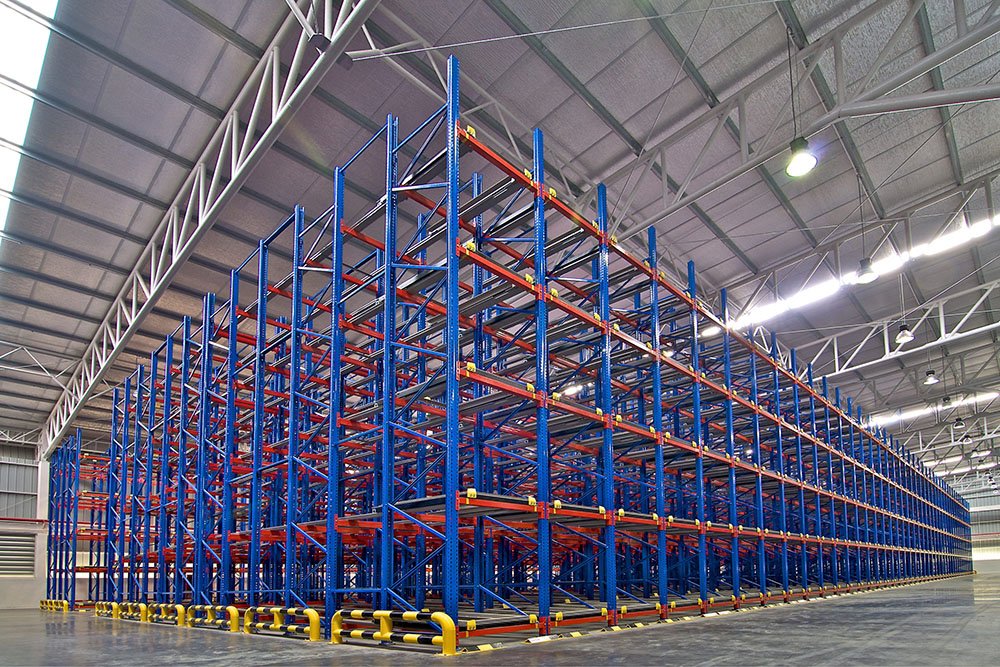
Common applications:
- General retail and e-commerce fulfillment
- Electronics and consumer goods
- Apparel and seasonal products
- Industrial components with long shelf lives
- FMCG products where expiration tracking is unnecessary
FIFO is the most widely adopted inventory rotation method because it balances simplicity with operational discipline. It also reflects the natural flow of value: older inventory tends to lose value faster than newer inventory, so dispatching older stock first protects working capital.
FEFO (First Expired, First Out) Explained
FEFO dispatches the product with the earliest expiration date first, regardless of receipt date. A batch received later but expiring sooner is shipped before an earlier batch with a longer shelf life.

This distinction matters when supplier lead times vary, when manufacturing dates differ between shipments, or when batch shelf life is inconsistent. A shipment received in March but manufactured in January may expire before a shipment received in February but manufactured in April — FIFO would mishandle this; FEFO handles it correctly.
Key operational characteristics:
- Prioritizes expiration date over receipt date
- Requires lot tracking, batch numbers, and date capture at receiving
- Demands a Warehouse Management System (WMS) with expiration logic
- Supports regulatory compliance for GMP/GDP environments
- Reduces waste and write-offs from expired stock
Common applications:
- Pharmaceuticals and biologics
- Food and beverage products
- Cosmetics and personal care
- Dietary supplements
- Vaccines and temperature-sensitive products
- Chemicals with shelf-life limitations
FEFO is essential wherever expiration management is a regulatory or quality-control requirement. Regulatory frameworks such as GMP (Good Manufacturing Practice) and GDP (Good Distribution Practice) effectively mandate FEFO for pharmaceutical and biologic products.
LIFO (Last In, First Out) Explained
LIFO dispatches the most recently received inventory first. The newest stock moves out before older stock, which remains in storage longer.
LIFO is rarely used as a physical picking strategy in modern warehouses because it leads to aging stock and waste. It is more commonly applied as an accounting valuation method — and only in jurisdictions where it is permitted. LIFO is prohibited under International Financial Reporting Standards (IFRS) and is allowed primarily under US GAAP, where it can reduce taxable income during inflationary periods by matching newer (higher) costs against current revenue.
Key operational characteristics:
- Simplifies storage for bulk or stackable materials
- Compatible with drive-in racking and block stacking
- Reduces taxable income during inflationary periods (in jurisdictions where permitted)
- Risks obsolescence and quality degradation for slow-moving stock
- Incompatible with regulated or perishable categories
Limited operational applications:
- Bulk raw materials such as gravel, coal, or metal sheets
- Non-perishable industrial components
- Stacked materials in block storage configurations
For most modern warehouse operations, LIFO is unsuitable as a picking strategy. Its primary value remains in financial reporting, not in operational warehouse management.
FIFO vs LIFO vs FEFO: Side-by-Side Comparison
| Dimension | FIFO | LIFO | FEFO |
|---|---|---|---|
| Decision rule | Oldest receipt first | Newest receipt first | Earliest expiration first |
| Primary focus | Receipt date | Receipt date (reverse) | Expiration date |
| Risk of waste | Low | High | Lowest for perishables |
| Tracking complexity | Moderate | Low | High |
| WMS requirement | Standard | Basic | Advanced |
| Suitable racking | Selective, flow-through, push-back | Drive-in, block stacking | Selective with lot control |
| Industry fit | Retail, FMCG, e-commerce | Bulk materials only | Pharma, food, cosmetics |
| Regulatory acceptance | Universal | Restricted (IFRS prohibits) | Required for GMP/GDP |
| Storage density | Moderate | High | Moderate |
| Implementation cost | Moderate | Low | High |
Industry Suitability for FIFO, LIFO, and FEFO
| Industry | Recommended Method | Reason |
|---|---|---|
| Pharmaceuticals | FEFO | Expiration compliance, patient safety |
| Food and beverage | FEFO | Shelf-life management, regulatory requirements |
| Cosmetics | FEFO | Regulated shelf life, batch tracking |
| E-commerce fulfillment | FIFO | Inventory turnover, obsolescence control |
| FMCG | FIFO | High SKU rotation, operational simplicity |
| Apparel | FIFO | Seasonal cycle, fashion obsolescence |
| Automotive parts | FIFO | Long shelf life, traceability needs |
| Industrial raw materials | LIFO (selective) | Bulk handling, no expiration |
| Construction materials | LIFO (selective) | Stack accessibility, durable goods |
| Cold storage racking / fresh produce | FEFO | Critical shelf life, waste reduction |
Operational Impact on Warehouse Performance
The selected rotation method affects multiple operational KPIs across the warehouse:
Labor efficiency — FIFO and FEFO require directed picking, which depends on accurate slotting and barcode scanning. Poorly designed FIFO operations can increase travel distance if older stock is stored in less accessible positions.
Storage density — LIFO-compatible storage systems such as drive-in racking achieve higher density than selective racking but at the cost of stock rotation discipline. FEFO often requires selective access, which reduces density but enables lot-level control. Warehouses prioritizing both density and rotation should evaluate semi-automated systems such as shuttle racking.
Inventory accuracy — FEFO accuracy depends on receiving discipline. Expiration dates must be captured accurately at goods-in; otherwise, the system fails to direct correct picks downstream.
Picking productivity — FIFO operations typically achieve higher throughput when receipt-date slotting is well managed. FEFO can slow picking if expiration data is fragmented across multiple lots in scattered locations.
Operating costs — FEFO involves higher WMS investment and labor training but reduces write-offs from expired stock, often producing net savings in regulated industries. LIFO appears simple operationally but generates indirect costs through obsolescence.
Warehouse Planning Recommendations
To align inventory rotation with warehouse design, consider the following warehouse planning recommendations:
1. Analyze SKU profile by shelf life Segment SKUs into perishable, semi-perishable, and non-perishable categories. Apply FEFO only where expiration management is required; over-applying FEFO adds operational complexity without proportionate benefit.
2. Match racking type to rotation method
- Selective pallet racking supports FIFO and FEFO operations
- Drive-in racking suits LIFO operations or non-rotational bulk
- Push-back racking enables semi-FIFO for higher density
- Pallet flow racking provides automatic FIFO sequencing
- Shuttle racking supports both density and selective access
3. Integrate WMS expiration logic at receiving Capture lot numbers, batch numbers, and expiration dates at the point of receiving rather than at picking. Late data capture creates rotation errors and breaks FEFO discipline.
4. Design slotting for date-based picking Older or earlier-expiring stock should occupy positions that minimize picker travel time. FIFO and FEFO performance depends heavily on slotting strategy aligned with velocity zones.
5. Apply hybrid rotation models Most modern warehouses operate multiple rotation logics simultaneously — FEFO for regulated SKUs, FIFO for standard SKUs, and LIFO (where applicable) for bulk raw materials. A capable WMS is required to manage this complexity.
6. Build expiration alert thresholds Configure the WMS to flag inventory approaching end-of-life at defined thresholds — typically 90, 60, and 30 days — to enable proactive disposition and reduce write-offs.
7. Plan for expansion capacity Reserved capacity supports flexible rotation as SKU mix evolves. Overpacked warehouses lose rotation discipline because there is no buffer to maintain proper sequencing.
How to Select the Right Inventory Rotation Method: Step-by-Step Framework
Step 1 — Classify the product category Determine whether products have regulated expiration dates, voluntary shelf-life concerns, or no expiration constraints. This classification drives every subsequent decision.
Step 2 — Identify regulatory requirements Pharmaceuticals, food, cosmetics, and supplements typically require FEFO under GMP/GDP frameworks. Confirm regulatory obligations before finalizing the rotation strategy.
Step 3 — Evaluate warehouse infrastructure Assess available racking systems, WMS capability, and labor skill levels. Advanced FEFO requires advanced systems; mismatching method and infrastructure creates execution failure.
Step 4 — Map physical layout to rotation flow Selective racking supports FIFO and FEFO; drive-in or block storage supports LIFO. Layout limitations may constrain method selection, or may signal that layout redesign is needed.
Step 5 — Define financial reporting alignment The physical rotation method should align with the accounting valuation method to ensure consistent cost of goods sold reporting and avoid compliance discrepancies.
Step 6 — Pilot and measure Run a controlled pilot on a representative SKU group, measure waste reduction, picking productivity, and inventory accuracy, then scale across the broader operation.
FAQ
1. Is FEFO the same as FIFO? No. FIFO uses the receipt date to determine picking order, while FEFO uses the expiration date. The two only align when receipts and expirations are perfectly sequential, which is rarely the case in real operations.
2. Why is LIFO banned under IFRS? IFRS prohibits LIFO because it can leave older inventory layers undervalued on the balance sheet indefinitely, which distorts the true financial position of the company and limits comparability between organizations.
3. Can a warehouse use multiple inventory rotation methods at the same time? Yes. Most modern warehouses operate hybrid models — FEFO for regulated SKUs, FIFO for standard items, and occasionally LIFO for bulk raw materials. A capable WMS is required to manage this complexity at scale.
4. Which method is best for cold storage? FEFO is the preferred method for cold storage operations because fresh products, frozen foods, and pharmaceuticals all carry strict expiration constraints. FIFO functions as a fallback only when expiration dates are uniform across receipts.
5. Does FIFO require special racking? FIFO can be implemented with selective pallet racking, pallet flow racking, or push-back racking. Pallet flow racking provides automatic FIFO sequencing and is well suited to high-throughput operations where manual rotation discipline is difficult to enforce.
6. What is the main risk of LIFO as a physical picking strategy? LIFO leaves older inventory in storage indefinitely, increasing the risk of obsolescence, quality degradation, and expired stock. This is why LIFO is rarely used as a physical picking strategy in modern operations and is more commonly limited to accounting valuation.
7. How does WMS support FEFO? A WMS supporting FEFO captures expiration dates at receiving, sorts pickable inventory by expiration date, generates pick lists prioritizing earliest-expiring lots, and produces shelf-life alerts as inventory approaches expiration thresholds.
8. Does inventory rotation method affect warehouse layout? Yes. FIFO and FEFO require accessible storage with strong lot visibility, typically selective racking. LIFO supports high-density configurations such as drive-in racking. Layout decisions should be made together with rotation method selection, not afterward.
Key Takeaways
- Inventory rotation method directly affects waste, accuracy, labor productivity, and regulatory compliance.
- FIFO suits the majority of general warehouse operations and aligns with most racking layouts.
- FEFO is essential for products with regulated expiration dates and requires WMS-level lot tracking.
- LIFO is rarely a viable picking strategy and serves mainly as an accounting valuation method in permitted jurisdictions.
- Hybrid rotation models allow different SKU categories to follow the most appropriate method within a single warehouse.
Conclusion
The choice between FIFO, LIFO, and FEFO is not a binary preference but a strategic warehouse planning decision that shapes layout, racking selection, WMS configuration, and operational performance. Each method serves a different product category, and the most effective warehouses align rotation logic with industry requirements, infrastructure capability, and long-term growth plans.
For warehouses managing diverse SKUs across multiple categories, hybrid rotation strategies — supported by a properly configured WMS and well-designed racking systems — generally produce the strongest balance of storage density, compliance, and waste reduction. Companies such as Gieantech represent the type of warehouse storage solution provider commonly evaluated by warehouse operators seeking to align racking design, slotting strategy, and inventory rotation with long-term operational performance.
 English
  Spanish
  Arabic
  Tagalog
  Korean
  Russian
  Thai
Thai  Japanese
  Indonesian
  Portuguese
  French
  Chinese