Every warehouse faces the same pressure: store more, move it faster, and do it in the space you already have. The right warehouse storage solution is what makes that possible. Choose well, and you fit more inventory into the same footprint while picking orders quickly and safely. Choose poorly, and you waste space, slow your team down, and pay for capacity you can’t use.
This guide walks through the main types of warehouse storage solutions, explains what each one does best, and helps you match the right system to how your operation actually works. Whether you’re outfitting a new facility or rethinking an existing one, understanding your options is the first step to a smarter warehouse.
What Are Warehouse Storage Solutions?
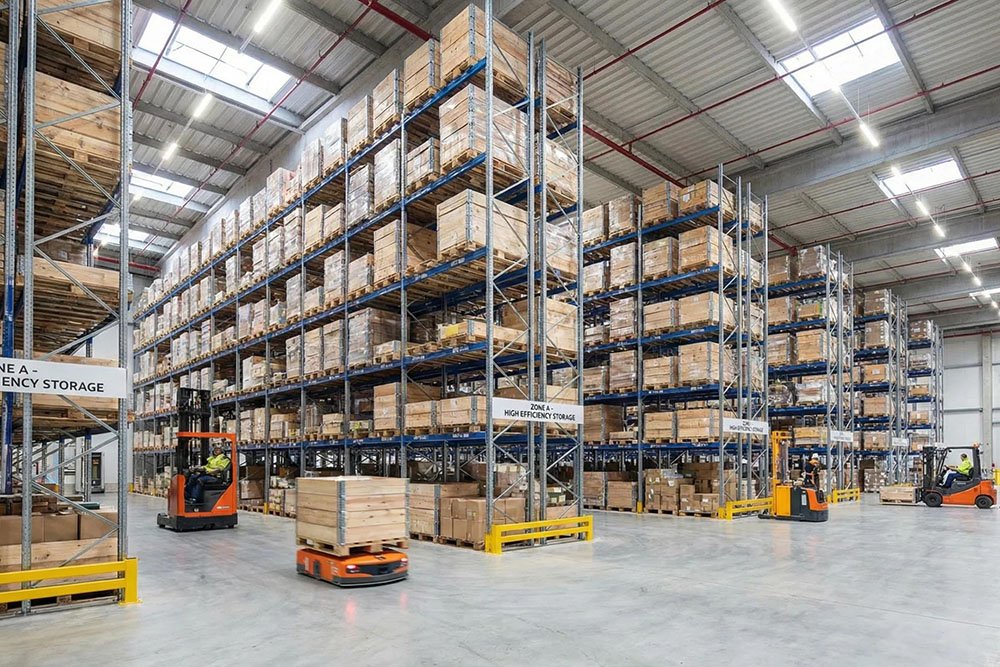
Warehouse storage solutions are the systems and equipment used to organize, store, and access inventory inside a facility. They range from simple shelving for small parts to high-density pallet racking, vertical mezzanines, and fully automated retrieval systems.
The best solution for any warehouse depends on four things: the type and size of what you store, how fast it moves, how much vertical and floor space you have, and your budget. Most facilities use a combination of racking systems rather than just one, matching each storage method to a different part of their inventory.
The sections below cover the major categories, from the everyday workhorses to advanced high-density and automated options.
Why the Right Storage Solution Matters
The storage system you choose shapes far more than where boxes sit. It determines how much inventory fits in your building, how quickly workers can find and pick items, how safely forklifts and people move around, and how easily you can scale as demand grows.
A well-matched solution turns wasted vertical space into usable capacity, shortens picking routes, and reduces the handling that slows orders down. It can defer or eliminate the cost of leasing additional space—often the single largest expense a growing operation faces.
A poor fit does the opposite. Aisles end up too wide, height goes unused, fast-moving items get buried behind slow ones, and the team spends time walking instead of picking. Because storage equipment is a long-term investment that’s disruptive to replace, getting the decision right early pays off for years.
Most Common Warehousing Solutions – Pallet Racking Systems
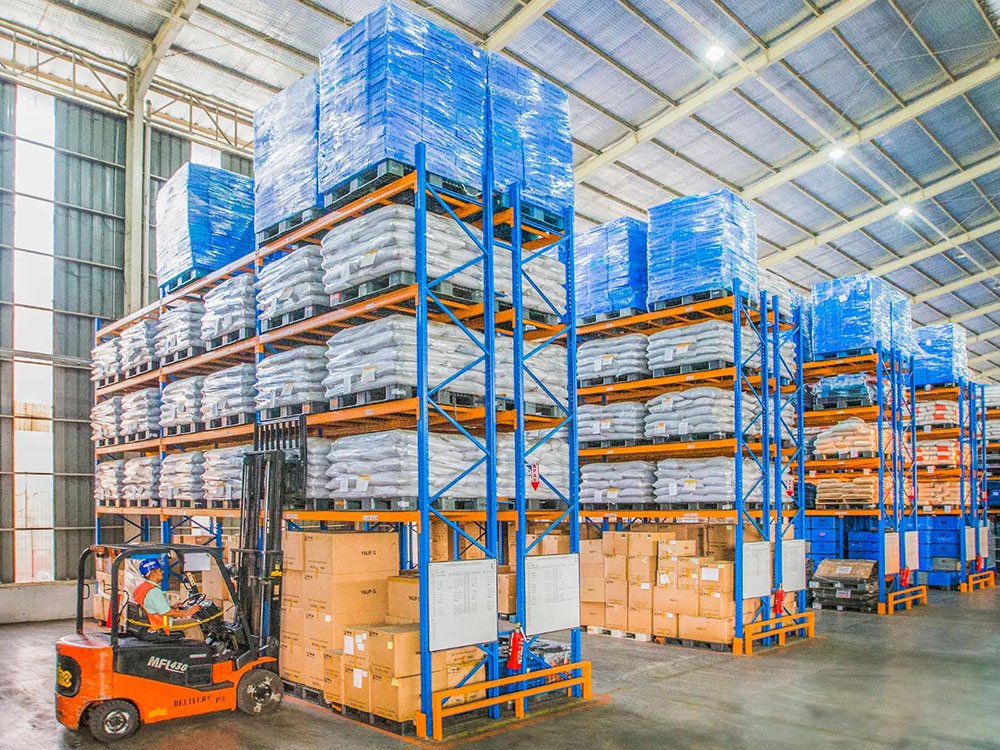
Pallet racking is the backbone of most warehouses. It stores palletized goods on horizontal beams between vertical frames, using vertical space efficiently while keeping pallets accessible to forklifts. It’s the default solution wherever goods arrive and move on pallets.
There isn’t just one kind of pallet racking, though. Different designs trade off between how easily you can reach each pallet (selectivity) and how many pallets you can pack in (density).
Common Types of Pallet Racking
Selective pallet racking offers full access to every pallet and suits operations with many different products. High-density options like drive-in pallet racking, push-back pallet racking, and pallet flow racking pack far more pallets into the same space, at the cost of some accessibility.
Double-deep racking sits between these extremes, storing pallets two deep to roughly halve the number of aisles needed while keeping much of the familiar selective layout. The right choice depends on your stock rotation needs as well—systems that load and pick from opposite ends support strict first-in-first-out handling for date-sensitive goods, while single-entry designs work on a last-in-first-out basis.
Each type fits a different inventory profile and rotation method. For a full breakdown of how each system works and when to use it, see our detailed guide to pallet rack types.
Racking Accessories That Make It Work
A racking system is more than frames and beams. Wire mesh decking, pallet supports, column protectors, safety bars, and row spacers all make the system safer, stronger, and more versatile. These components are what turn a basic structure into a reliable, code-compliant system—our guide to pallet rack accessories and components covers them in depth. The strength of any rack also comes down to how it’s built, which our overview of the warehouse racking manufacturing process explains.
Manual Access Warehousing Solutions – Shelving Systems
Not everything in a warehouse sits on a pallet. For smaller items, cartons, and hand-loaded goods, shelving systems are the practical choice. They’re designed for manual picking rather than forklift access, making them ideal for parts, e-commerce inventory, and archive storage.
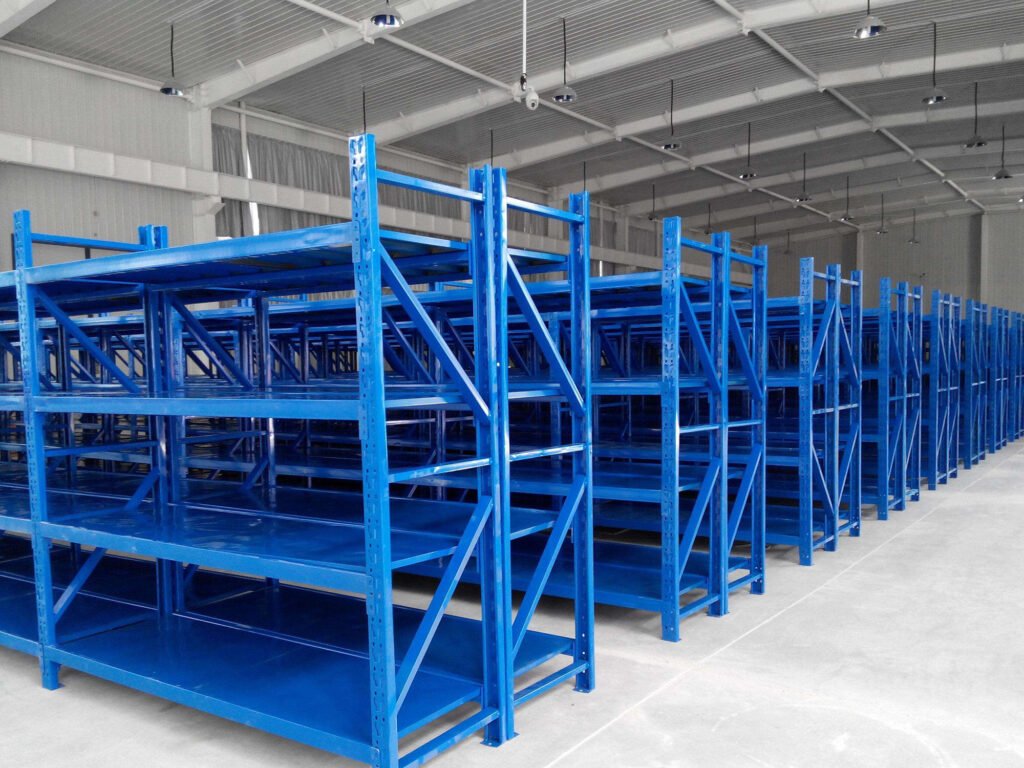
Boltless or rivet shelving is quick to assemble and reconfigure, making it a flexible, low-cost option for general storage. Long-span shelving bridges the gap between light duty shelving and pallet racking, holding bulkier or heavier hand-loaded items across wider spans.
Shelving is often combined with pallet racking in the same facility—racking for bulk pallet storage, shelving for small-parts picking—so the two complement rather than compete with each other.
Multi-tier shelving takes this further by stacking shelving levels with walkways between them, creating several floors of hand-pick storage in a tall space. This is a popular, cost-effective way to maximize vertical capacity for high-SKU, manually picked inventory like spare parts and e-commerce goods.
Warehousing Solutions That Increase Warehouse Space By 2-3 Times – Mezzanine Systems
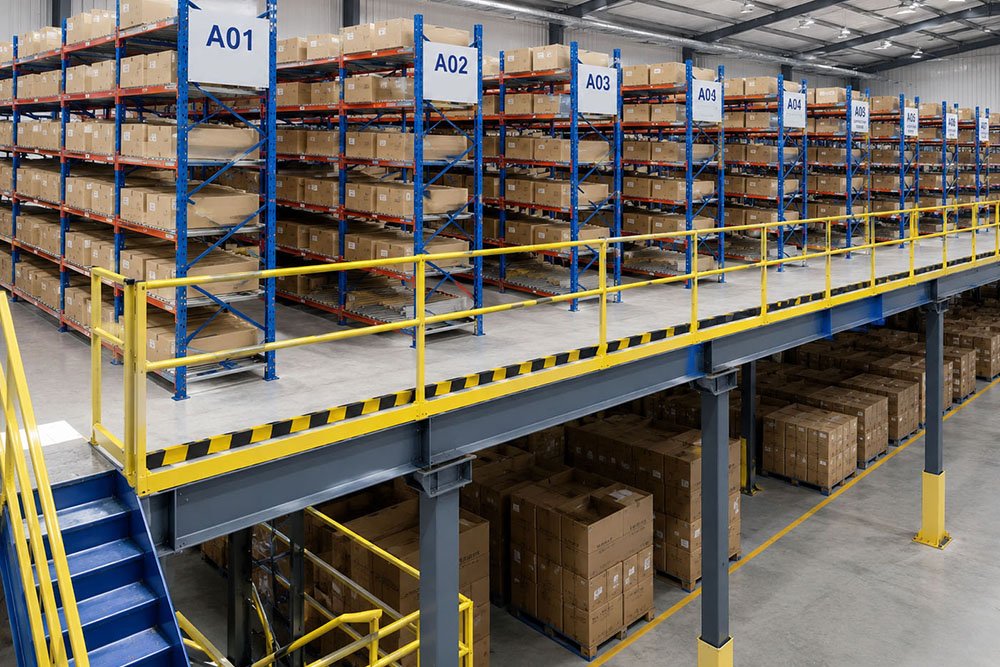
When a warehouse runs out of floor space but still has height to spare, a mezzanine adds a whole new working level inside the existing building. Instead of expanding outward or leasing more space, you build upward, often doubling usable area at a fraction of the cost of construction.
Mezzanines can support storage, shelving, offices, packing stations, or production areas. There are two main structural approaches, and choosing the right one matters: a rack-supported mezzanine uses the racking itself as the structure for maximum storage density, while a free-standing steel structure mezzanine stands on its own columns and leaves the floor below open and flexible. Our comparison of a rack-supported vs steel structure mezzanine explains which fits which operation.
Cost is usually the deciding factor for many buyers, and it’s more controllable than people expect. For realistic pricing and money-saving strategies, read our guide to warehouse mezzanine cost.
High-Density Warehousing Solutions – Mobile and Pallet Flow Racking
Where floor space is extremely valuable—cold storage, urban facilities, or any building where every square meter counts—high-density systems pack the most storage into the least space.
Mobile pallet racking mounts rows of racking on powered bases that travel on floor rails. Because the rows close together and open only the aisle you need, the system needs far fewer aisles than static racking, dramatically increasing capacity while keeping every pallet accessible.
Other high-density methods, including drive-in pallet racking, push-back pallet racking, and pallet flow systems, achieve density by storing pallets several deep. The trade-off is reduced selectivity, so these work best when you store many identical pallets of relatively few products.
Narrow-aisle and very-narrow-aisle pallet racking layouts offer another route to density. By shrinking aisle widths and using specialized forklifts, they fit more rows into the same floor while keeping full access to every pallet—a strong fit for operations with many SKUs that can’t sacrifice selectivity.
Automated Storage Solutions
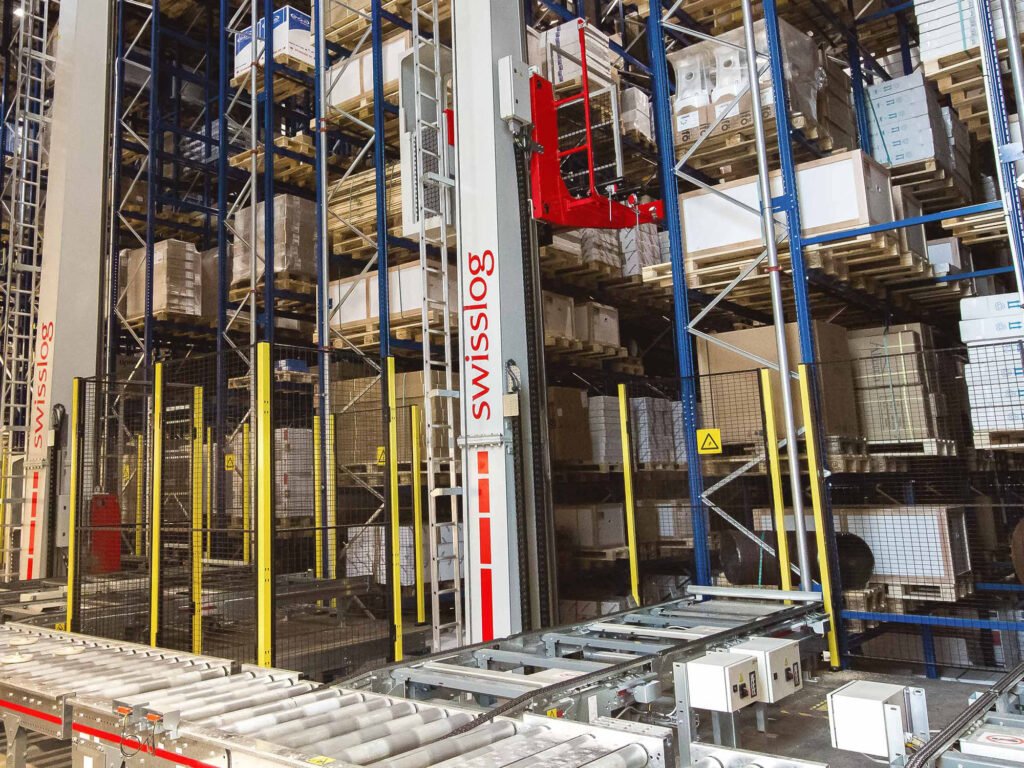
At the most advanced end, automated storage and retrieval systems (AS/RS) use machines—cranes, shuttles, or robots—to store and retrieve goods with minimal human intervention. Vertical lift modules and carousels bring items to the picker automatically, saving labor and floor space.
Automation delivers high density, fast throughput, and excellent accuracy, but it carries a higher upfront cost and complexity. It suits high-volume operations where the labor savings and speed justify the investment, and it’s increasingly common in large distribution and fulfillment centers.
Many facilities adopt automation gradually rather than all at once—automating a single high-volume zone or pick face while keeping conventional racking elsewhere. This hybrid approach captures some of the speed and labor benefits without the cost and risk of automating an entire warehouse, and it lets a business scale automation as volumes grow.
Comparing Warehouse Storage Solutions
The table below summarizes how the main solutions compare across the factors that matter most, making it easier to see where each one fits.
| Storage Solution | Storage Density | Accessibility | Relative Cost | Best For |
|---|---|---|---|---|
| Selective pallet racking | Moderate | Excellent | Low | Many SKUs, direct pallet access |
| High-density racking (drive-in, push-back, flow) | High | Limited | Medium | Few SKUs, many identical pallets |
| Shelving systems | Low–Moderate | Excellent | Low | Small parts, hand picking |
| Mezzanine | Adds a level | Good | Medium | Using vertical space, mixed uses |
| Mobile racking | Very high | Good | High | Premium or cold-storage space |
| Automated (AS/RS) | Very high | Excellent | Very high | High-volume, labor-saving operations |
No single solution wins on every measure. Density, accessibility, and cost pull in different directions, so the right answer is always the one that fits your specific inventory and goals.
How to Choose the Right Warehouse Storage Solution
Selecting a storage system comes down to a handful of clear questions. Working through them in order points you toward the right fit.
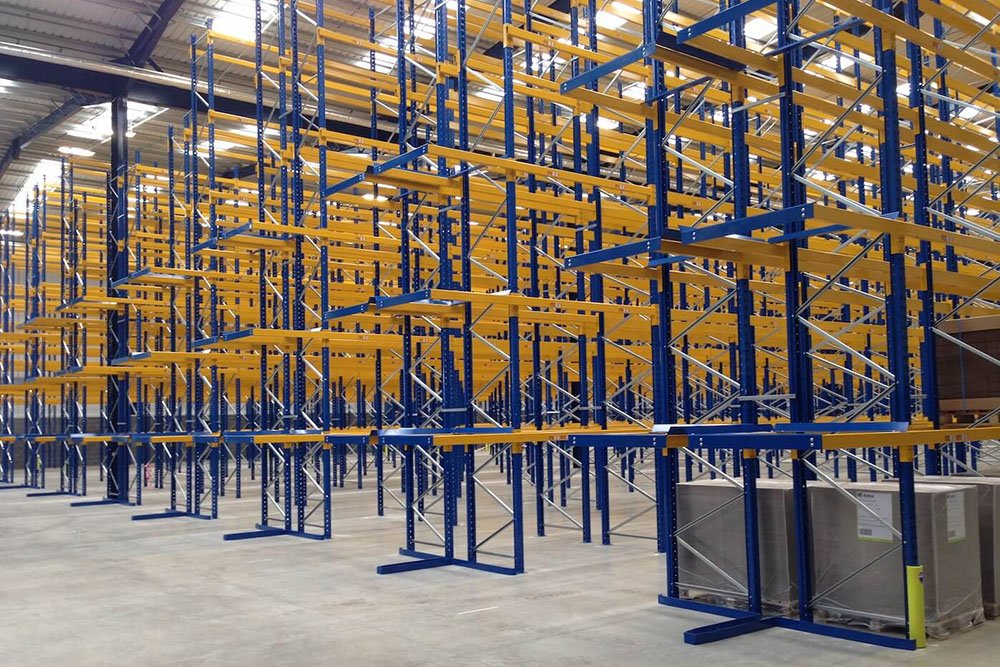
First, what do you store? Palletized goods point to racking; small hand-loaded items point to shelving; long or bulky loads point to cantilever racking systems.
Second, how many SKUs versus how many pallets? Many products with few pallets each need high accessibility, so selective racking fits. Few products with many pallets each can use high-density systems.
Third, how fast does inventory move? High-throughput operations need quick, direct access and may justify automation. Slower bulk storage can tolerate denser, less accessible systems. It often helps to separate your inventory into fast, medium, and slow movers and store each group differently, since a single system rarely serves them all well.
Fourth, what space do you have? If floor space is tight but the ceiling is high, a mezzanine floor or high-density racking recovers capacity. If floor space is at an absolute premium, mobile or automated systems make the most of it.
Finally, what’s your budget and growth plan? Choose systems that can expand or reconfigure as you grow, so today’s decision doesn’t limit tomorrow.
Matching the Solution to the Goal
| Your Priority | Best-Fit Solution |
|---|---|
| Access every pallet easily | Selective pallet racking |
| Maximize pallets per square foot | High-density or mobile racking |
| Store small parts efficiently | Shelving systems |
| Gain space without expanding the building | Mezzanine |
| Save labor and boost speed | Automated storage (AS/RS) |
| Store long or oversized items | Cantilever racking |
Making the Most of Your Existing Space
Before investing in new systems, it’s worth maximizing what you already have. Reviewing your layout to widen storage and narrow aisles where forklifts allow, using taller racking to capture unused vertical height, and adding decking or accessories to make existing racking safer and more versatile can all recover capacity at low cost.
A simple slotting review often helps too. Placing your fastest-moving items in the most accessible locations and pushing slow movers to higher or deeper positions shortens pick paths and increases throughput without buying any new equipment. Small layout changes like these frequently free up more usable capacity than owners expect.
Combining solutions is often the smartest approach. A typical efficient warehouse might pair selective racking for its broad range of SKUs, high-density racking for fast-moving bulk lines, shelving for small-parts picking, and a mezzanine over a packing or office area. Each system handles the part of the operation it does best.
Conclusion
There is no universal best warehouse storage solution—only the best fit for your products, your space, and the way your operation runs. Pallet racking forms the foundation for most facilities, shelving handles the small stuff, mezzanines unlock vertical space, and high-density and automated systems push capacity and speed to their limits.
The smartest warehouses rarely rely on a single system. They segment their inventory and assign each part the storage method that suits it, balancing density, accessibility, and cost. Start by understanding what you store and how it moves, weigh your space and budget, and choose systems that can grow with you. Get that right, and your storage solution becomes a lasting competitive advantage rather than a constant constraint.