Adding a second level inside your warehouse is one of the smartest ways to gain space without expanding the building. But there are two very different ways to do it, and choosing the wrong one can cost you in money, flexibility, and storage efficiency. The two main options are a rack-supported mezzanine and a steel structure (free-standing) mezzanine.
They look similar from a distance—both create an elevated working level—but structurally they are opposites. This guide explains how each one works, compares them side by side, and helps you decide which fits your operation.
The Short Answer
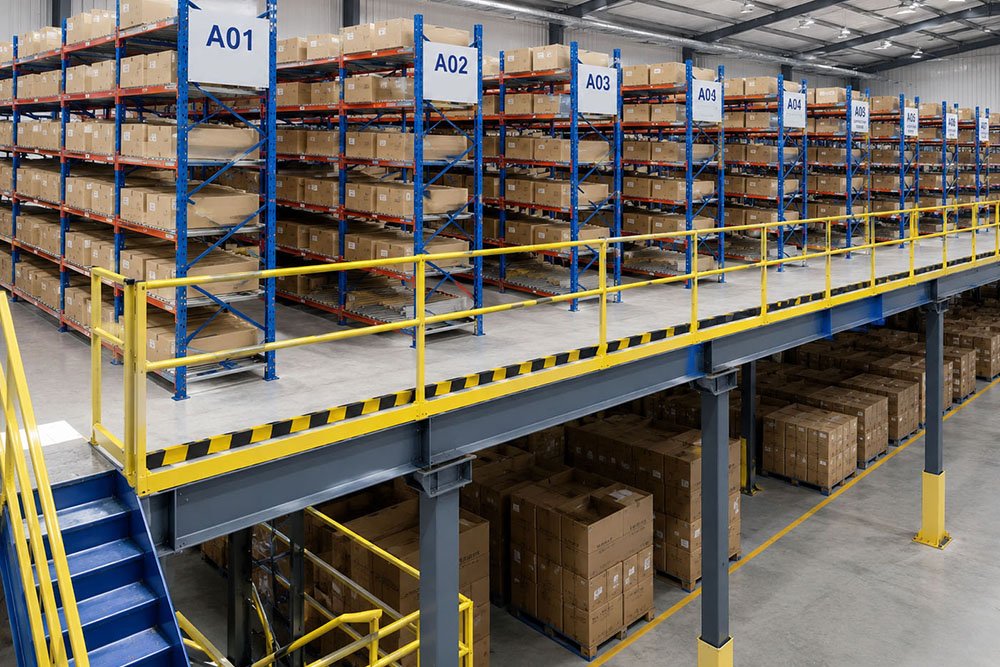
A rack-supported mezzanine uses the storage racking itself as the structural support for the upper floor. The racking does double duty: it holds product and carries the platform above. It is the most space-efficient and storage-focused option.
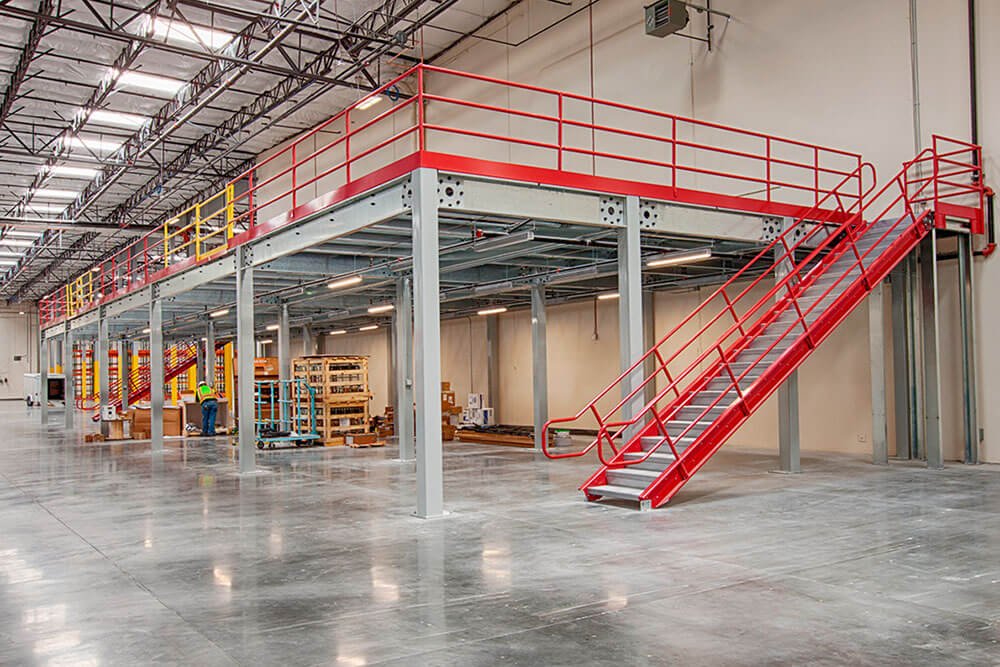
A steel structure mezzanine is an independent platform built on its own steel columns and beams, completely separate from any racking. The space underneath is open and can be used for anything—offices, assembly, picking, or storage.
In short: choose a rack-supported mezzanine when your goal is maximum storage density, and choose a steel structure mezzanine when you need a flexible open floor below that can serve any purpose.
What Is a Rack-Supported Mezzanine?
A rack-supported mezzanine—also called a rack-clad or shelving-supported mezzanine—is an elevated walkway and floor system built directly on top of, and supported by, pallet racking or shelving. Instead of adding separate columns, the upright frames of the racking carry the load of the floor above.
How It Works
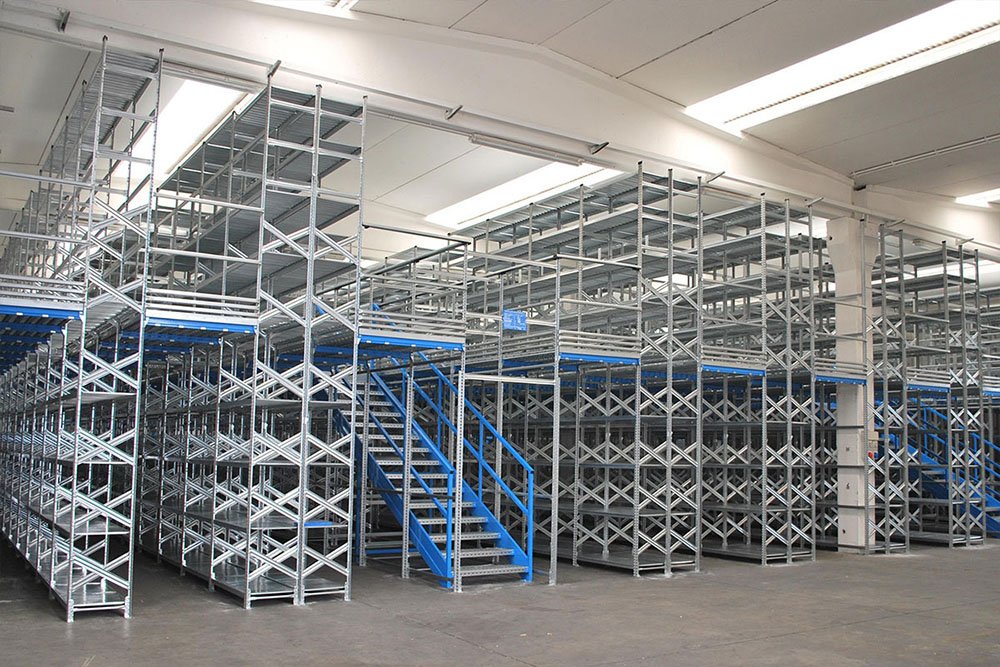
The racking is engineered from the start to do two jobs at once. The same upright frames that store pallets or cartons also support the deck panels, walkways, and any second (or third) level above them. Because the structure and the storage are one integrated system, there are no separate support columns taking up space.
This makes the rack-supported design extremely efficient. Every vertical element is earning its keep as both storage and structure, so almost none of the footprint is “wasted” on structure alone.
Because the racking and the building structure are engineered together as a single system, a rack-supported mezzanine is typically designed and certified as one unit. The upright frames, beams, decking, and bracing are all sized to handle both the stored product and the loads of the floors and people above. This integration is what gives the system its efficiency, but it also means the design must be right from the start—the racking layout and the structure are locked together.
Where It Works Best
Rack-supported mezzanines shine in high-density storage and order-picking operations—think e-commerce fulfillment, parts distribution, and archive storage. They are ideal when the entire vertical space is meant for storage and picking on multiple levels, and when you want to pack the most inventory possible into a footprint. To understand the racking systems that form the backbone of these structures, see our guide to pallet rack types.
What Is a Steel Structure Mezzanine?
A steel structure mezzanine—often called a free-standing or conventional mezzanine—is a standalone elevated platform supported by its own dedicated steel columns and beams. It does not rely on racking for support and stands entirely on its own.
How It Works
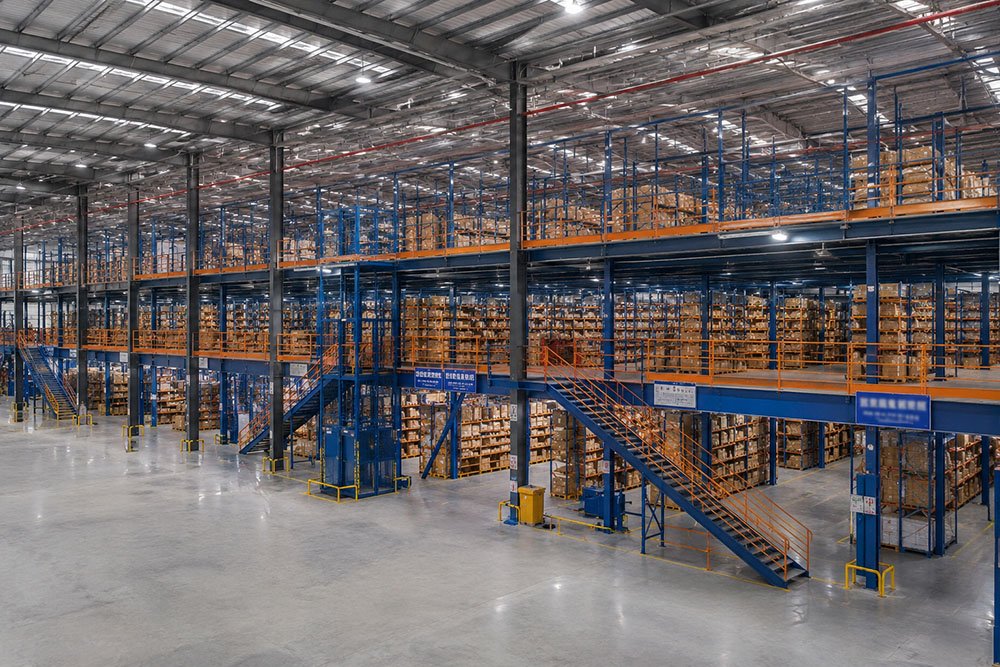
Independent columns are anchored to the floor and carry beams that support the decking above. The racking, if any, sits separately on the floor below or on the platform above, but it plays no structural role. The platform is essentially a second floor inserted into the building.
Because the structure is self-supporting, the space beneath it is completely open and unobstructed except for the support columns. That open floor can be used for whatever the operation needs, and it can be changed later without touching the platform above.
The platform’s capacity is set by its own engineering—the size and spacing of the columns, the beams, and the decking—rather than by any storage system. This decoupling of structure from storage is the defining feature of the free-standing approach, and the source of both its flexibility and its slightly higher cost for pure storage applications.
Where It Works Best
Steel structure mezzanines suit operations that need a versatile open area below the platform—offices, break rooms, production lines, assembly stations, packing areas, or even showrooms. They are the right choice when the space underneath has to serve a purpose other than rack-based storage, and when you may want to change that purpose in the future.
Rack-Supported vs Steel Structure Mezzanine: Head-to-Head Comparison
The clearest way to weigh the two is to compare them directly across the factors that matter most.
| Factor | Rack-Supported Mezzanine | Steel Structure Mezzanine |
|---|---|---|
| Structural principle | Racking carries the floor | Independent columns carry the floor |
| Space below | Filled with racking (storage only) | Open and flexible (any use) |
| Primary purpose | Maximize storage density | Versatile floor space |
| Storage efficiency | Highest | Moderate |
| Cost (typical) | Often lower per usable area for storage | Higher for equivalent storage area |
| Flexibility to reconfigure | Limited—structure tied to racking | High—floor below is open |
| Use beneath platform | Storage racking | Offices, production, picking, anything |
| Installation | Faster, fewer separate parts | More components, columns to anchor |
| Best fit | Dense, storage-driven operations | Mixed-use or office/production needs |
The table makes the core trade-off obvious. A rack-supported mezzanine wins on pure storage efficiency and often on cost-per-stored-pallet, while a steel structure mezzanine wins on flexibility and the freedom to use the floor below however you like.
Cost Comparison
Cost is rarely a simple “one is cheaper” answer—it depends on what you’re measuring. A rack-supported mezzanine integrates structure and storage into a single system, so for a purely storage-driven project it often delivers more stored capacity per dollar, since you aren’t paying for separate columns and a deck plus separate racking.
A steel structure mezzanine, by contrast, asks you to pay for the platform’s structure and then add racking or equipment beneath it separately. For equivalent storage, that typically costs more—but you’re buying flexibility, not just shelf space.
Both options share many of the same line items, from decking and safety railings to permits and installation. For a full breakdown of what drives mezzanine pricing and how to keep it under control, read our detailed guide to warehouse mezzanine cost.
Space Efficiency and Storage Density
If storage density is your top priority, the rack-supported design is hard to beat. Because the racking is the structure, there are no separate columns eating into the floor plan, and the entire volume of the building is organized around holding and picking product. Multi-level rack-supported systems can fill a tall building with several floors of accessible storage.
A steel structure mezzanine is less dense by nature. Its support columns occupy floor space, and the open area below—while flexible—isn’t optimized purely for storage. You gain usable square footage, but not the wall-to-wall storage efficiency of a rack-supported system.
Flexibility and Future Changes
This is where the steel structure mezzanine pulls ahead. Because the platform stands on its own, the floor beneath can be reconfigured freely—today it’s a packing area, next year it’s an assembly line or office. Nothing structural depends on keeping the racking in place.
A rack-supported mezzanine is far more committed. The racking is the building’s skeleton, so you can’t simply remove or rearrange large sections without affecting the structure above. If your storage layout is stable and storage-focused, that’s no problem. If you expect frequent change, the steel structure option preserves your ability to adapt.
Installation, Lead Time, and Relocation
Rack-supported mezzanines tend to involve fewer separate structural elements, since the racking and the support are one system, which can streamline installation. They are, however, more permanent—because the structure is integrated, dismantling or relocating one is a major undertaking.
Steel structure mezzanines have more individual components and require columns to be positioned and anchored, but as free-standing, bolt-together systems they are often easier to extend, modify, or relocate later. The right choice depends on whether you value a tightly integrated permanent system or a more adaptable one.
Whichever route you take, the quality of the steel and fabrication matters enormously to safety and lifespan. Our overview of the warehouse racking manufacturing process explains what separates a well-built structure from a weak one.
Load Capacity and Engineering Differences
The two systems handle loads in fundamentally different ways, and this shapes what each can do.
In a rack-supported mezzanine, the stored product and the upper floor share the same structure, so the engineering has to account for both at once. The racking is designed to carry not just pallets on its beams but the weight of the deck, the walkways, the people working above, and any equipment up there. This dual-purpose loading demands careful design, but when done right it delivers enormous storage capacity within a compact footprint.
In a steel structure mezzanine, the platform’s load rating is independent of any storage. The columns and beams are sized purely for the floor load above—commonly expressed as a uniform load per square foot for the intended use, whether light office space or heavy production. Because the structure isn’t tied to a racking layout, you have freedom in how you load and use the floor, within its rated capacity.
For storage-heavy goals, the rack-supported system’s integrated capacity is highly efficient. For mixed or evolving uses, the steel structure system’s independent, predictable floor rating is easier to plan around.
Safety and Code Compliance
Both mezzanine types are governed by building codes and workplace safety standards, and both require the same core safety features: guardrails along open edges, compliant stairs, and safety gates wherever pallets are loaded to or from an upper level. Fire protection requirements—such as sprinklers above and below the platform—can apply to either system depending on size, height, and use, and they can represent a significant share of the total project.
The key compliance difference lies in how the structure is certified. A rack-supported mezzanine must be engineered and stamped as an integrated structural system, since the racking is load-bearing for the building, not just for storage. A steel structure mezzanine is certified as a standalone platform. In both cases, proper engineering, correct anchoring, and code-compliant safety hardware are non-negotiable—cutting corners on any of them puts both people and inventory at risk.
Which One Should You Choose?
The decision comes down to what you want the space to do. Use this quick guide.
| Choose a Rack-Supported Mezzanine if… | Choose a Steel Structure Mezzanine if… |
|---|---|
| Your goal is maximum storage density | You need open, flexible space below |
| The whole vertical space is for storage and picking | You’ll use the floor for offices, production, or packing |
| You want the most pallets or SKUs per square foot | You expect to reconfigure the layout over time |
| Your storage layout is stable and long-term | You want the option to relocate or expand later |
| You’re running high-volume fulfillment or distribution | You’re blending storage with other operations |
In practice, many large facilities use both: rack-supported systems in the dense storage zones, and steel structure mezzanines over areas that need offices or production space. There’s no universal winner—only the best fit for each part of your operation.
If you’re still finalizing the racking that will live on or beneath your mezzanine, our guide to pallet rack accessories and components covers the decking, safety gates, and protective hardware that keep these systems safe and code-compliant.
Conclusion
Rack-supported and steel structure mezzanines solve the same fundamental problem—running out of floor space—in two very different ways. The rack-supported mezzanine fuses storage and structure into one highly efficient system, making it the top choice for dense, storage-driven operations. The steel structure mezzanine keeps the floor below open and flexible, making it the right pick when versatility and future change matter more than raw density.
Decide what the space beneath the platform needs to do, weigh storage efficiency against flexibility, and factor in cost and your long-term plans. Match the system to how your warehouse actually works, and either option becomes a smart, lasting investment in your facility’s capacity.