When a warehouse runs out of floor space, the instinct is often to lease a bigger building or break ground on an expansion. Both are slow and expensive. A warehouse mezzanine offers a far cheaper alternative: instead of growing outward, you build upward, adding a second working level inside the building you already have. The question every operations manager eventually asks is simple—how much does a warehouse mezzanine cost?
The honest answer is that it depends on the size, the load it must carry, the features you add, and a list of “hidden” costs that catch many buyers off guard. But that doesn’t mean you’re stuck guessing. This guide breaks down realistic price ranges, explains exactly what drives the numbers up or down, and lays out practical ways to cut the cost—including the increasingly popular route of sourcing a prefab mezzanine from China. By the end, you’ll be able to put together a budget that reflects your real project rather than a vague “it depends.”
What a Warehouse Mezzanine Costs: The Baseline Numbers
Before getting into the variables, it helps to anchor on the figures most suppliers and projects converge on. While every mezzanine is built to order, the market has settled into fairly predictable ranges that make a useful starting point.
Typical Price Per Square Foot
For a standard steel storage mezzanine, the cost typically lands somewhere between $50 and $150 per square foot, with around $70 per square foot being a common industry average for a straightforward design. Basic configurations with standard load capacities can start lower, in the $35 to $85 per square foot range, while highly customized or feature-heavy platforms can climb well past $150 and, at the very top end, toward $250 per square foot once offices, heavy load ratings, and specialized features are involved.
The reason for such a wide band is that “mezzanine” covers everything from a bare steel storage platform to a fully finished elevated office with HVAC. The cost per square foot is really a reflection of how much steel, decking, engineering, and finishing the design demands. As a planning rule of thumb, a basic storage mezzanine sits near the bottom of the range, and every upgrade—heavier loads, taller clearances, complex shapes, premium finishes—nudges it upward.
Total Project Cost by Size
Translated into whole-project numbers, most small to medium mezzanine installations fall between $10,000 and $50,000, while larger or more complex builds routinely exceed $100,000. A common mid-size storage mezzanine of roughly 1,000 to 3,000 square feet often lands somewhere in the $30,000 to $60,000 range for the structure itself, before the extras. Those are useful brackets for an early budget conversation, but they’re structure-focused estimates—the full project cost, as the next sections explain, includes several additional line items.
How It Compares to Building or Leasing
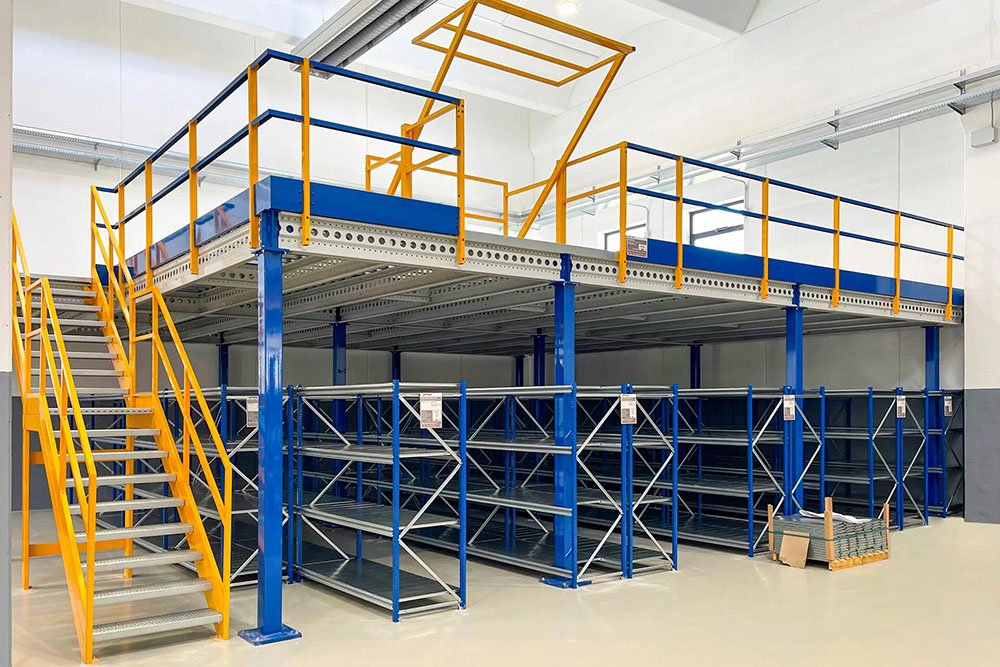
The reason mezzanines remain so popular is the comparison to the alternatives. Adding floor space through new construction generally runs in the same per-square-foot territory as a mezzanine on the structure alone, but new construction also means land, foundations, a full building envelope, roofing, and utilities—pushing the true cost far higher. A mezzanine, by contrast, reuses your existing roof, walls, and slab, so you’re paying only for the new working level. For an operation that needs to expand capacity by a moderate amount within its current footprint, a mezzanine is almost always the more cost-effective path, and it can often be installed in a matter of weeks rather than the months a building project demands.
There’s a financial bonus, too: because a mezzanine is typically a free-standing, demountable structure rather than a permanent building improvement, it’s often treated as equipment for tax and depreciation purposes, which can improve the after-tax economics compared with bricks-and-mortar construction.
What Drives the Cost Up or Down
Understanding the variables behind the price is what lets you control your budget rather than simply react to a quote. A handful of factors account for most of the variation between a $40-per-square-foot platform and a $200-per-square-foot one.
Size and Square Footage
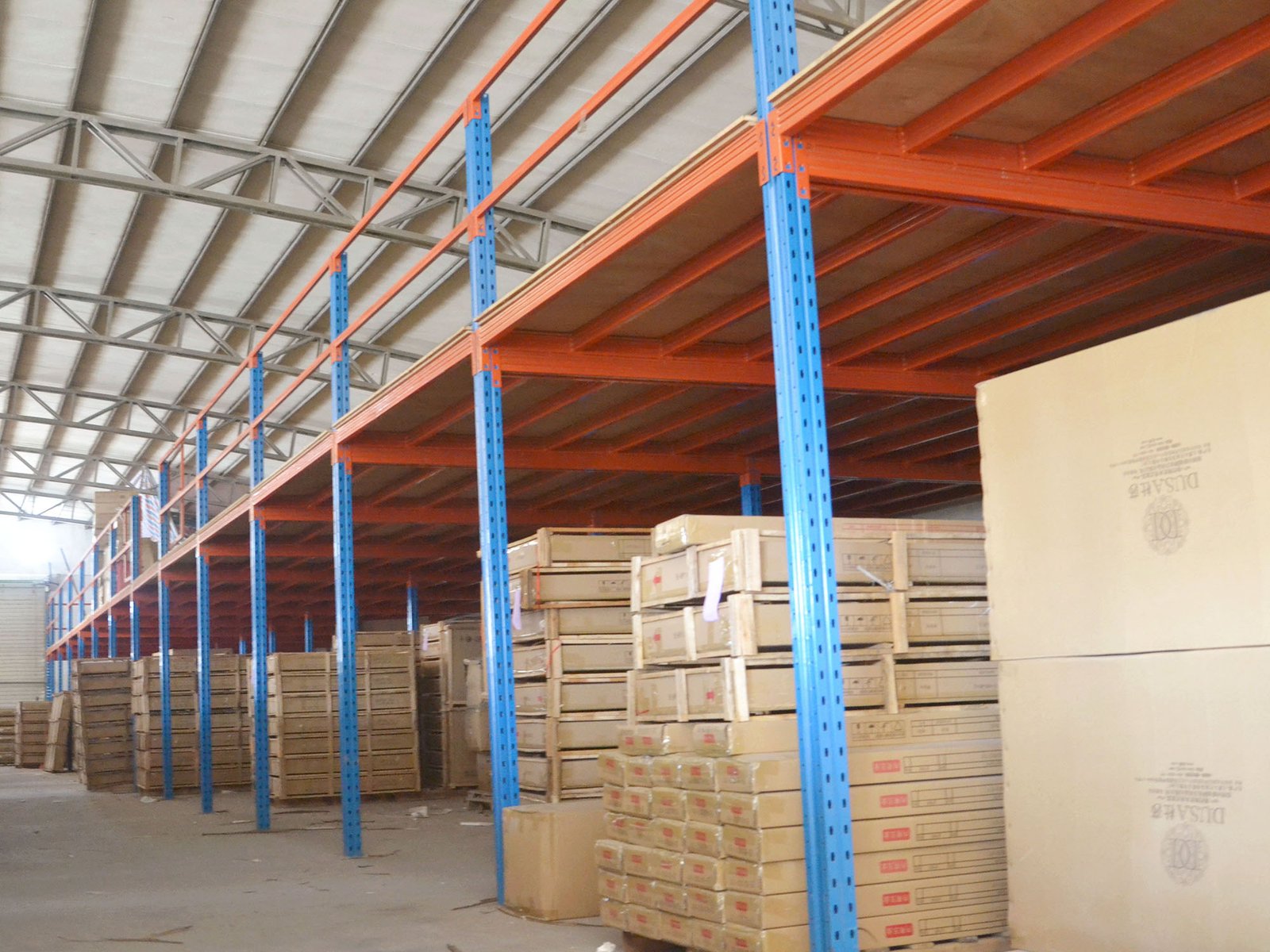
Size is the most obvious driver, but it works in a slightly counterintuitive way. While a bigger mezzanine costs more in total, it usually costs less per square foot, because the fixed costs of design, engineering, and mobilization are spread across more area. Once a project passes roughly 1,000 square feet, the per-square-foot rate tends to drop, and on larger builds over about 2,000 square feet the savings from economies of scale can be in the range of 15 to 25 percent per square foot. In other words, building slightly larger than your immediate need can sometimes be more economical per unit of space than building exactly to a minimal footprint.
Load Capacity
How much weight the mezzanine must support has a direct and significant effect on cost. A light-duty platform intended for office space or light storage needs far less steel than one engineered to hold heavy pallets, machinery, or dense inventory. Higher load ratings per square foot demand heavier beams, stronger columns, more support points, and tougher decking—all of which add material and engineering cost. Over-specifying capacity “just in case” is one of the most common ways buyers quietly inflate their budgets, so matching the load rating honestly to the intended use is an important cost lever.
Height and Layout Complexity
The clear height beneath and above the platform affects cost as well. Standard clearances in the eight-to-ten-foot range are the most economical; once you push beyond about twelve feet, the structure needs heavier members to remain stable, which can add meaningfully to the per-square-foot price. Layout complexity matters just as much. A simple rectangular mezzanine is the cheapest shape to build. Designs with multiple cut-outs, angles, irregular outlines, or several separate elevated zones require more engineering and fabrication, and complex shapes can raise costs by 20 to 40 percent compared with a clean rectangle.
Decking and Materials
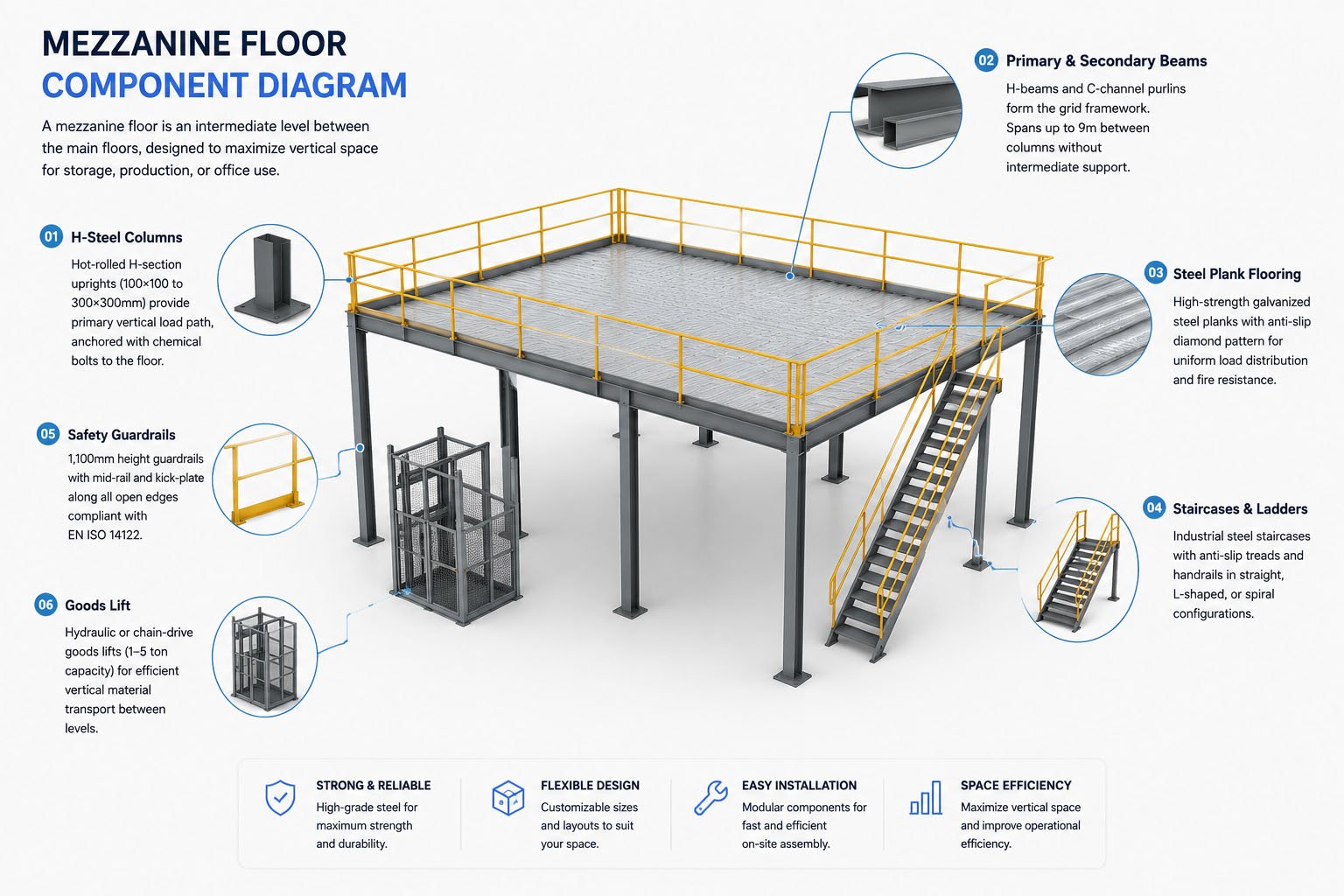
The decking surface is another variable. Options range from economical wood or composite board to corrugated steel and resin surfaces, each with a different price and a different suitability for the load and use. Most mezzanines use a steel structure, but the decking choice, the steel gauge, and any premium materials all feed into the final figure. Heavier or more specialized decking costs more but may be necessary for the loads or the working environment.
Accessories and Safety Features
Staircases, gates, handrails, and edge protection aren’t optional extras in most cases—building and safety codes require many of them—but the number and quality of these components affects the bottom line. Additional staircases, pallet gates, upgraded handrail systems, and material-handling features like lifts or conveyors each add cost. Specialized additions such as equipment platforms or conveyor integration can add anywhere from $15 to $50 per square foot depending on complexity, so the accessory list deserves careful thought during planning.
Fire Protection and Code Compliance
One factor surprises many first-time buyers: fire protection can account for a very large share of a mezzanine’s total cost—by some estimates as much as 35 to 40 percent. Depending on the size, use, and local code, a mezzanine may trigger requirements for sprinkler systems beneath or above the platform, fire-rated materials, or additional egress. Meeting building codes and fire-safety rules isn’t negotiable, and these requirements can reshape both the design and the budget. Planning for compliance early, with input from your supplier and local authorities, prevents expensive redesigns later.
The Hidden Costs People Forget
The structure price is only part of the story. The most common budgeting mistake is treating the per-square-foot structure cost as the total cost, when in reality a cluster of ancillary expenses can add a substantial amount on top. A useful planning guideline is to budget an extra 15 to 20 percent of the structure cost for these items.
Installation and Labor
Mezzanines ship as components and must be assembled and erected on site. Installation is frequently billed as a percentage of the material cost—often somewhere between 30 and 50 percent. The figure climbs in congested warehouses where crews have to work carefully around live operations, since that slows the job down. If you can clear the work area and schedule installation during a quieter period, you can hold this cost down.
Freight and Delivery
Shipping the steel to your site is its own line item, commonly running around 10 percent of the material cost, though it varies with distance and your location. Remote sites or long hauls cost more. This matters especially when comparing local suppliers with distant or overseas ones, where freight becomes a larger part of the equation.
Site Preparation and Foundation Work
Most mezzanines rest on the existing concrete slab, but that slab has to be adequate for the column loads. Site preparation—reinforcing the floor, relocating utilities, or modifying the slab to accept support columns—can run in the range of $5 to $15 per square foot. Where the existing floor is in poor condition, foundation improvements can be considerably more. Having the slab evaluated early avoids nasty surprises mid-project.
Permits, Engineering, and Inspections
A commercial mezzanine almost always needs permits and stamped engineering. Building permits can range from a few hundred to a few thousand dollars depending on the jurisdiction and project size, professional engineering review and stamping commonly runs into the low thousands, and required inspections add several hundred dollars more. These are unavoidable in most regions and should be in the budget from the start rather than discovered late.
Utilities and Finishing
Finally, putting a working level overhead often means extending lighting, electrical, and sometimes HVAC or sprinkler service to the new space. Utility integration of this kind can range from modest to tens of thousands of dollars depending on what the mezzanine needs and how the building is configured. A bare storage platform may need little; an elevated office or production area needs much more.
How to Save Money on a Warehouse Mezzanine
With the cost drivers laid out, the strategies for spending less become clear. Saving money on a mezzanine isn’t about cutting corners on safety—it’s about making smart choices in design, sourcing, and timing.
Choose Prefab and Modular Over Built-in-Place
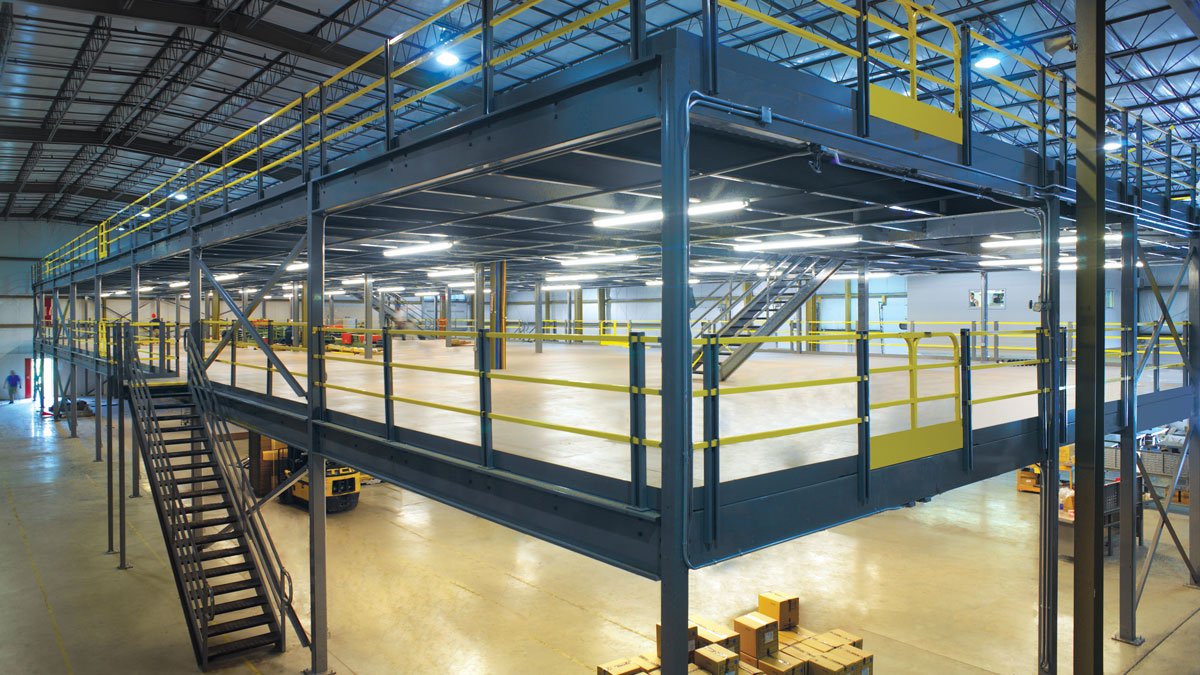
One of the biggest savings comes from choosing a prefabricated, modular mezzanine rather than a fully custom structure fabricated and welded on site. Prefab mezzanine systems are engineered and manufactured in a factory as standardized, bolt-together components, then assembled on site. This off-site fabrication cuts labor, shortens installation time, reduces on-site disruption, and lowers cost—often substantially—compared with bespoke construction. Modular systems also offer flexibility: they can be reconfigured, expanded, or even relocated as your needs change, which protects the investment over the long term. For the majority of storage and light-industrial uses, a prefab modular mezzanine delivers the same function for less money.
Source a Prefab Mezzanine from China
For buyers willing to look beyond local suppliers, sourcing a prefab mezzanine from China has become one of the most effective ways to reduce the structure cost. China produces a very large share of the world’s prefabricated steel structures and has a deep, mature supply chain for steel mezzanines, racking, and pre-engineered buildings. Because Chinese factories benefit from lower labor costs, large economies of scale, and integrated steel supply, the factory price of a prefab mezzanine is typically well below what an equivalent locally fabricated system costs. Many of these manufacturers offer one-stop service—design, fabrication, and shipping—along with BIM-based design and automated fabrication lines that produce consistent, high-quality components.
The savings can be significant on the structure itself, but the route only pays off if you account for the full landed cost and handle compliance properly, which the next section covers in detail.
Keep the Design Simple
Because complex shapes and tall clearances drive cost, the single easiest design-side saving is to keep the mezzanine rectangular, standard in height, and free of unnecessary cut-outs or separate zones. A clean, simple platform uses steel efficiently and minimizes engineering. Specify only the load capacity you genuinely need rather than padding it, choose standard decking and finishes where the application allows, and resist adding accessories that aren’t required by code or by your workflow. Each of these restraint choices compounds into a meaningfully lower quote.
Consider a Used or Reconfigured System
Used mezzanines can offer real savings, often in the range of $35 to $75 per square foot, and they typically install faster than new builds. The trade-off is that you must verify the structure’s condition, safety, and capacity, and confirm that the dimensions actually fit your space and needs. For the right project, a quality used system is a sound economy; for a precise or heavily loaded application, a new prefab system is usually the safer bet.
Plan for the Future
Finally, choosing an expandable, modular design from the outset can save money over time even if it costs a little more today. A mezzanine you can extend or reconfigure later avoids the far greater expense of ripping out and replacing a system that no longer fits. Building slightly larger now, while you’re already paying for design, engineering, and installation, is frequently cheaper per square foot than adding space in a separate project down the road.
Sourcing a Prefab Mezzanine from China: A Closer Look
Because the China route offers some of the largest potential savings, it deserves a careful, clear-eyed walkthrough. Done well, it delivers a high-quality structure for far less; done carelessly, the savings can evaporate in unexpected costs or compliance problems.
Why It’s Cheaper
The cost advantage comes from fundamentals rather than corner-cutting. Chinese steel fabricators operate at enormous scale, source steel domestically and cheaply, and benefit from lower labor costs and highly automated production lines. Many run modern design and fabrication operations using the same engineering software and welding automation found in Western factories. The result is that the same tonnage of properly engineered, powder-coated steel simply costs less to produce, and that difference flows through to the buyer’s quote.
Understanding the Real Landed Cost
The factory price is not the price you actually pay, and treating it that way is the most common mistake importers make. The true landed cost includes international ocean freight, import duties and tariffs that apply in your country, customs clearance, inland transport from the port, and foundation and assembly work on your end—which together can add roughly 20 percent or more on top of the factory price. Freight and duties in particular can be substantial for heavy steel shipments, and they vary by destination and trade policy. The right way to compare a Chinese prefab mezzanine against a local quote is on a full landed-and-installed basis, not factory price versus local price. Even after these additions, the overseas option often remains cheaper for the structure—but only the honest comparison tells you by how much.
Vetting the Supplier
Quality and compliance are where due diligence pays off. Look for manufacturers with recognized certifications—ISO 9001 for quality management, and structural standards such as AISC or EN 1090 depending on where the system will be used—and ask for material certificates and detailed fabrication drawings. Confirm the supplier can engineer to the load and safety standards your local authority requires, since a mezzanine built to a different code may not pass inspection at home. Many reputable Chinese factories provide installation drawings, supervision, and even on-site technical support, and offer long structural warranties. Requesting references, reviewing the supplier’s project portfolio, and, for larger orders, arranging third-party inspection are all worthwhile safeguards. A clear contract specifying standards, tolerances, and inspection rights protects you on both quality and timeline.
Lead Time and Logistics
The trade-off for the cost saving is time. While a local prefab mezzanine might be installed within a few weeks, an imported system involves fabrication plus weeks of ocean transit, so the overall timeline from order to standing structure is typically longer. Plan the schedule accordingly, and remember that local code stamping, permitting, and final assembly still happen on your end. For buyers who can plan ahead rather than reacting to an urgent space crunch, the longer lead time is a reasonable price for the saving; for an emergency, a local source may be worth the premium.
Calculating the Return on Investment
Cost is only half the equation—what the mezzanine returns matters just as much. The core economic case is that a mezzanine adds usable space at a fraction of the cost of leasing or building more. Because it eliminates or defers the need for additional warehouse area, many mezzanines pay for themselves within roughly 18 to 36 months through the value of the storage or working capacity they unlock, after which the gained space is effectively free. When you weigh a mezzanine’s cost, set it against the annual cost of the equivalent floor space you’d otherwise have to rent or build, and the payback period usually makes the investment easy to justify.
The flexibility adds further value. A modular mezzanine can be expanded or relocated as the business evolves, so the investment isn’t stranded if operations change. Combined with the favorable tax treatment that often applies to demountable structures, the long-run economics tend to be strong—provided the system is sized and specified sensibly rather than over-built.
Putting Together a Realistic Budget
Bringing all of this together, a sound mezzanine budget is built in layers rather than from a single number. Start with the structure: estimate the square footage you need and apply a realistic per-square-foot rate for your load and complexity, leaning toward the lower end for a simple rectangular storage platform and higher for taller, heavier, or more finished designs. Then add the ancillary costs—installation, freight, site preparation, permits, engineering stamping, inspections, and any utility work—remembering the guideline of an extra 15 to 20 percent of the structure cost for these items, and more if fire protection requirements are significant.
If you’re considering an imported prefab system, build a parallel landed-cost estimate that adds freight, duties, customs, and local assembly to the factory price, then compare the two on equal footing. Finally, weigh the total against the value of the space gained and the cost of the alternatives. Approached this way, the question shifts from a vague “how much does a mezzanine cost?” to a concrete, defensible budget you can take to decision-makers with confidence.
Conclusion
A warehouse mezzanine remains one of the most cost-effective ways to expand capacity without expanding your footprint, but the real cost reaches well beyond the headline per-square-foot figure. Expect a standard storage mezzanine to start around $50 to $70 per square foot for the structure, with the total project shaped by load capacity, height, layout complexity, fire protection, and a layer of installation, freight, site, and compliance costs that prudent buyers plan for from the beginning.
The good news is that the cost is highly controllable. Choosing a prefabricated, modular system over a custom on-site build, keeping the design simple, specifying only the capacity you need, and considering an overseas prefab mezzanine from an established Chinese manufacturer can all lower the bill substantially—so long as you compare options on a full landed-and-installed basis and never compromise on engineering or code compliance. Plan the budget in layers, weigh it against the value of the space you’ll gain, and a mezzanine becomes not just an expense but one of the smartest investments a growing warehouse can make.