Every pallet rack that holds tons of inventory in a warehouse began life as a coil of flat steel. Between that raw coil and the finished, load-rated storage system lies a sequence of precise, carefully controlled manufacturing steps—engineering, roll forming, punching, welding, surface treatment, and rigorous quality control. Understanding the warehouse racking manufacturing process reveals why some racking performs reliably for decades while cheaper, poorly made alternatives bend, corrode, or fail under load.
For anyone specifying, buying, or designing storage systems, knowing how racking is actually made is more than technical curiosity. The choices a manufacturer makes at each stage—the grade of steel, the accuracy of the roll-forming line, the integrity of the welds, the quality of the coating—directly determine the strength, safety, and lifespan of the rack you eventually load with product. This guide walks through the complete manufacturing journey of steel warehouse racking, step by step, and explains why each stage matters to the finished system.
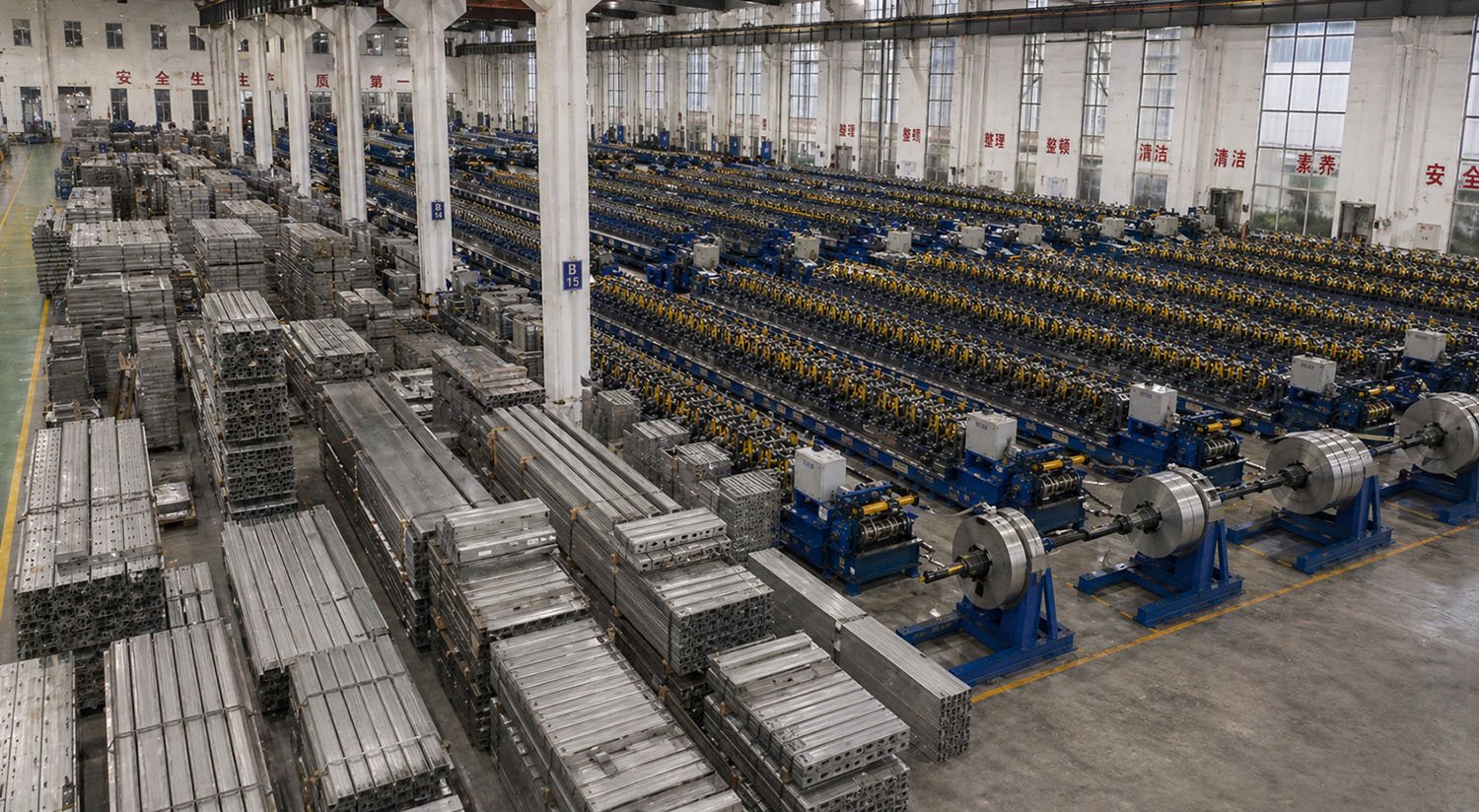
It Begins with Engineering and Design
Long before any steel is cut, the manufacturing process starts at a drawing board and a set of calculations. Warehouse racking is a structural product: it has to carry heavy, often dynamic loads safely, year after year, in environments full of forklift traffic. Getting the engineering right at the outset is the foundation everything else builds on.
Load Analysis and Structural Engineering
The first task is defining what the rack must do. Engineers establish the required load capacity per beam level, per bay, and per upright, along with the heights, depths, and configurations the system needs to support. From there they calculate the steel sections, gauges, and bracing patterns that will carry those loads with an appropriate safety margin. These calculations account for the weight of stored goods, the way that weight is applied, and the forces a rack experiences during loading, unloading, and even seismic events in regions where that applies.
This stage is governed by industry design standards, which set out how capacities are determined and verified. A reputable manufacturer designs to recognized structural codes rather than guessing at dimensions, because the difference between an adequately engineered upload and an under-built one is invisible until the moment a rack is overloaded. The engineering phase translates a customer’s storage needs into precise specifications for every component.
CAD Modeling and Prototyping
With the structural requirements defined, designers build detailed CAD models of each component—uprights, beams, braces, connectors, footplates, and accessories. These models specify exact profiles, hole patterns, dimensions, and tolerances, and they feed directly into the machinery that will form and cut the steel. Many manufacturers also produce prototypes or first-article samples to validate the design physically before committing to full production. This is where a new rack profile is proven out, ensuring that the parts fit together correctly and perform as the calculations predict.
Selecting and Inspecting the Raw Material
Racking is only as strong as the steel it’s made from, so material selection is a critical step that quietly determines the quality of the finished product. Warehouse racking is typically manufactured from high-strength structural steel supplied in large coils, with the specific grade and thickness chosen to match the engineered design.
Choosing the Right Steel
The steel’s grade defines its strength—particularly its yield strength, the point at which it begins to deform permanently. Higher-strength steel allows a manufacturer to achieve a given load rating with less material, producing racking that is both strong and efficient. The thickness, or gauge, of the steel is matched to each component’s role: heavier-duty uprights and beams use thicker steel than lighter-duty parts. Using the correct grade and gauge is essential, because substituting thinner or weaker steel to cut costs directly undermines the rack’s load capacity even if the finished part looks identical.
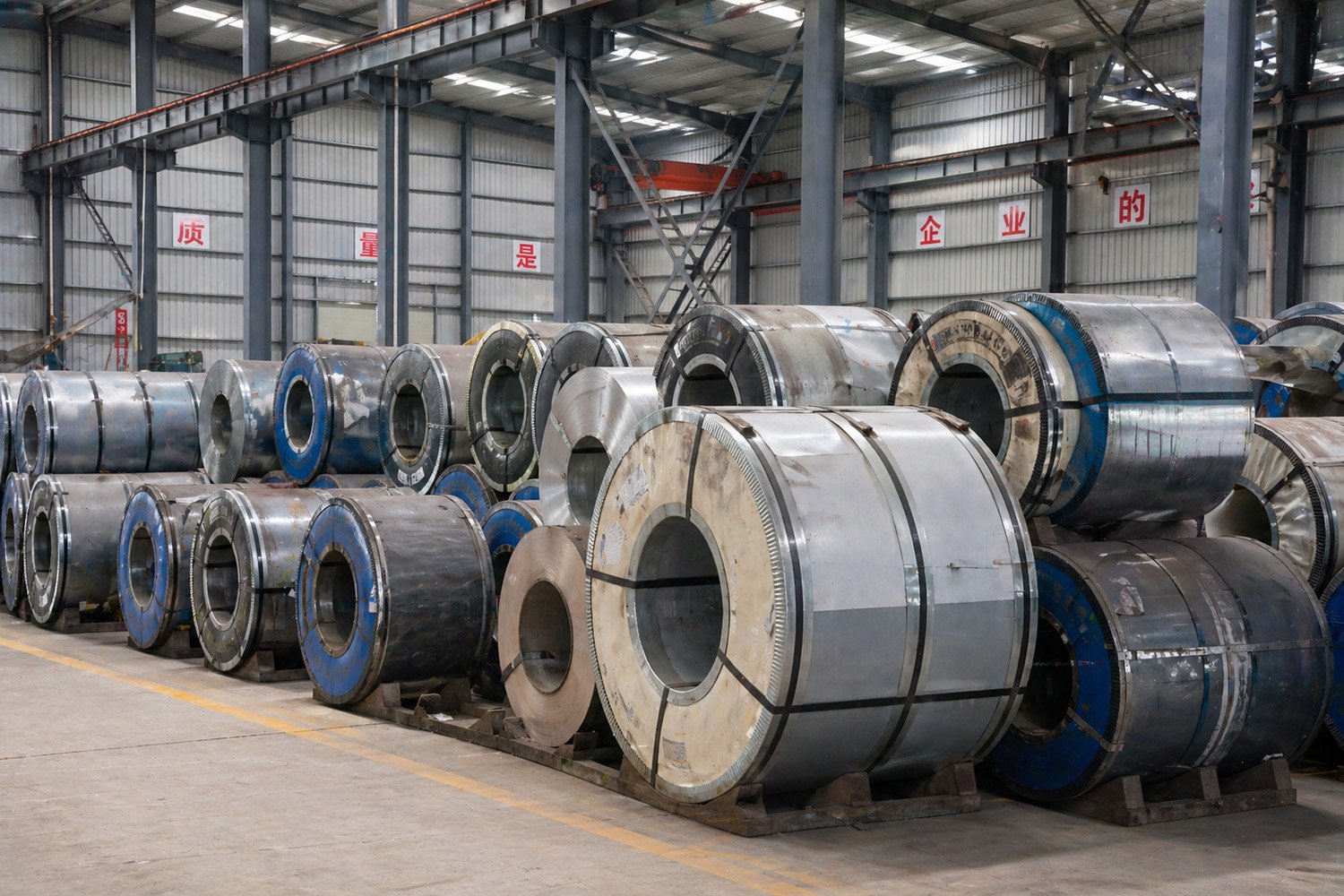
Incoming Material Inspection
Before any coil enters production, quality-conscious manufacturers inspect and verify the incoming steel. This includes checking that the grade and thickness match the order, reviewing the supplier’s material certificates, and confirming the steel is free of defects. Catching a substandard coil at this stage prevents flawed material from being formed into components that would fail inspection—or worse, slip through and weaken the finished rack. Traceability matters here too: keeping records of which steel went into which production run supports quality control all the way through to the customer.
Roll Forming: The Heart of the Process
Roll forming is the defining manufacturing process for most warehouse racking components, and it’s where flat steel begins to take the recognizable shape of uprights and beams. The technique is prized because it produces consistent, high-strength profiles at high speed and volume.
Slitting and Decoiling
Production begins by feeding a steel coil into a decoiler, which unwinds it into a continuous flat strip. Depending on the line, the coil may first be slit to the precise width required for the component being made. This continuous strip is then fed into the roll-forming machine, ready to be progressively shaped.
Forming the Profile
Inside a roll-forming line, the flat strip passes through a series of paired rollers arranged in sequence. Each pair of rollers bends the steel a little more than the last, gradually transforming the flat strip into the complex cross-sectional profile of an upright column or a load beam. Because the steel is shaped cold and progressively rather than in a single aggressive bend, roll forming preserves the steel’s strength and produces clean, accurate, repeatable profiles. The shape of these profiles is engineered for structural performance—the folds, returns, and flanges in an upright column, for example, are what give it its load-bearing rigidity.
Roll forming’s great advantage is consistency at scale: once the line is set up correctly, it produces thousands of identical, dimensionally accurate parts. The trade-off is that the tooling is specific to each profile, so the rollers must be precisely configured and maintained. A well-tuned roll-forming line is one of the clearest markers of a serious racking manufacturer.
Punching and Perforation
A crucial feature of pallet racking is the pattern of slots or holes punched into the upright columns, which allows beams to be positioned and adjusted at different heights. This punching is often integrated into the roll-forming line, where presses perforate the strip at exact intervals either before or during forming. The accuracy of this hole pattern is vital: the slots must align perfectly so beam connectors seat securely and the system stays adjustable. Misaligned or inconsistent punching makes assembly difficult and can compromise the connection between beams and uprights, so precision at this stage carries through to how well the finished rack goes together and holds load.
Cutting to Length
As the formed and punched profile exits the line, it’s cut to the required length, typically by an automated flying cutoff that shears the moving steel without stopping the line. This produces individual upright columns, beam sections, and brace members at precise lengths, ready for the next stages. Accurate cutting ensures that frames stand at the correct height and beams span the correct width, both of which matter for fit and for load distribution.
Welding and Fabrication
While beams are often single roll-formed pieces fitted with end connectors, upright frames are assemblies that must be welded together. Welding and fabrication are where individual formed parts become the structural sub-assemblies that define a racking system.
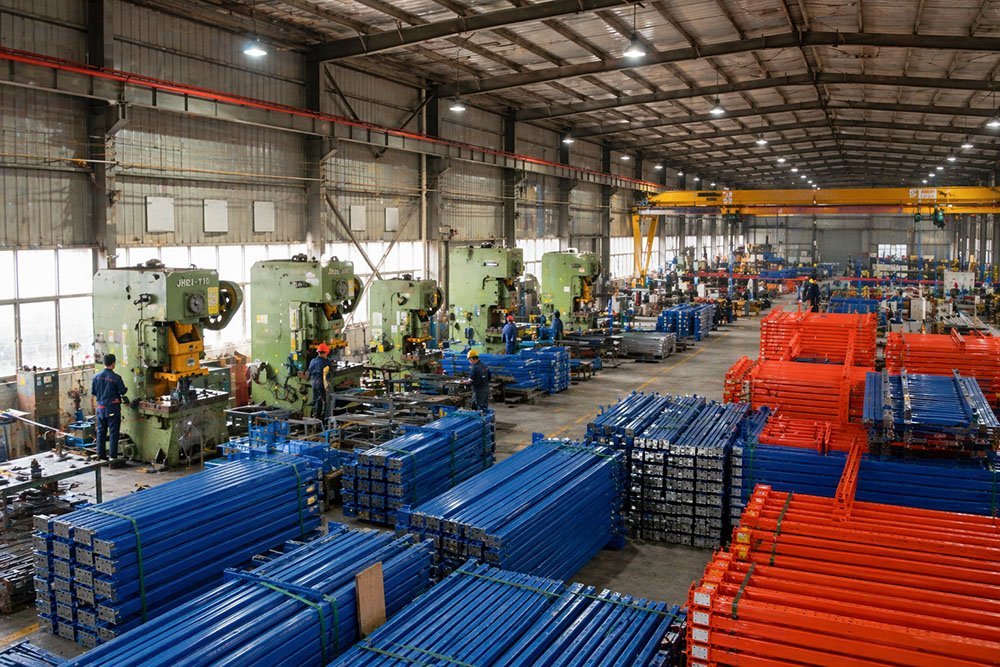
Assembling Upright Frames
An upright frame consists of two vertical columns joined by horizontal and diagonal braces. In fabrication, these components are positioned in jigs or fixtures that hold them in precise alignment, then welded at every joint. The bracing pattern—engineered during the design phase—is critical to the frame’s rigidity, so the welds that connect braces to columns must be strong and consistent. A frame is only as reliable as its welds; a poor weld at a brace joint becomes a weak point under load.
Welding Beam Connectors
Load beams are fitted with connectors—the brackets or end plates that slot into the upright punching to join beams to frames. These connectors are welded to the ends of each beam, and the strength of this weld is one of the most safety-critical aspects of the whole system, because the beam-to-upright connection carries the full load of the stored pallets. Manufacturers pay close attention to weld quality here, ensuring full, sound welds that won’t crack or pull away under the stresses of daily use.
Welding Methods and Automation
Quality racking manufacturers increasingly use robotic and automated welding for consistency. Robotic MIG welding applies the same precise, repeatable weld to every joint, eliminating the variability of manual work and producing uniform strength across thousands of parts. Automated welding also improves speed and lets the manufacturer document and control weld parameters. Where manual welding is used, skilled welders and clear standards are essential. Either way, the goal is the same: strong, clean, consistent welds that hold the structure together under load for the life of the rack.
Surface Treatment and Finishing
Once components are formed, welded, and assembled, they undergo surface treatment and finishing. This stage isn’t just cosmetic—the finish protects the steel from corrosion and wear, directly affecting how long the racking lasts, especially in humid, cold, or chemically demanding environments.
Cleaning and Pretreatment
Before any coating is applied, parts must be thoroughly cleaned. Surface treatment lines degrease the steel to remove oils from forming and welding, then apply a chemical pretreatment—often a phosphate or similar conversion coating—that cleans the surface further and creates a profile the finish can grip. This preparation is what makes the coating adhere properly and resist peeling or chipping later. Skipping or skimping on pretreatment is a common shortcut that leads to premature coating failure, so good manufacturers treat this step as essential rather than optional.
Powder Coating
The most common finish for warehouse racking is powder coating. In this process, a dry powder—typically an electrostatically charged polymer—is sprayed onto the grounded steel parts, where it clings evenly to every surface, including edges and recesses. The coated parts then pass through a curing oven, where heat melts and fuses the powder into a tough, continuous, hard-wearing layer. Powder coating produces a durable, attractive finish that resists scratches, chemicals, and corrosion far better than conventional liquid paint, and it does so without the solvent emissions of wet painting, making it cleaner for the environment as well.
The thickness and uniformity of the powder coating influence both appearance and protection, and reputable manufacturers monitor coating thickness as part of their quality control. The familiar consistent color and smooth finish of quality racking comes from a well-run powder-coating line.
Alternative Finishes
For especially harsh conditions—high humidity, outdoor exposure, cold-store environments, or corrosive atmospheres—manufacturers may use galvanizing instead of or in addition to powder coating. Galvanizing applies a protective zinc layer that offers excellent long-term corrosion resistance. The choice of finish is matched to the rack’s intended environment, with standard powder coating serving most indoor warehouses and heavier protection reserved for demanding applications.
Quality Control and Testing
Throughout and after manufacturing, quality control verifies that the racking meets its engineered specifications. Because racking is a safety-critical structural product, thorough testing isn’t a formality—it’s what separates trustworthy systems from dangerous ones.
Dimensional and Visual Inspection
Inspectors check that formed profiles, hole patterns, and cut lengths match the design tolerances, and that welds are complete and sound. Components are examined for defects, correct dimensions, and proper assembly. Catching a dimensional error here prevents parts that won’t fit together or won’t carry their rated load from reaching the customer. Consistent dimensions are also what allow components from different production runs to remain compatible.
Load and Performance Testing
Beyond measuring parts, manufacturers verify structural performance. This can involve physically load-testing representative beams and frames to confirm they carry their rated capacities with the required safety margin, and validating that real-world performance matches the engineering calculations. Testing components to failure or to a multiple of their rated load demonstrates that the design and manufacturing together deliver the promised strength. This evidence underpins the load ratings printed on a rack’s capacity plate.
Coating and Material Verification
Quality programs also check the finish—measuring coating thickness and adhesion and confirming corrosion resistance—and verify that the correct steel grade was used throughout. Together with documentation and traceability, these checks confirm that what leaves the factory matches what was engineered and ordered. A manufacturer with a robust quality system can stand behind its load ratings with confidence.
Packaging and Delivery
The final manufacturing stage prepares the finished components for transport and installation. Racking is typically shipped knocked-down—as separate uprights, beams, braces, and accessories—rather than pre-assembled, which is far more efficient to ship and easier to install on site. Components are bundled, protected, and labeled so they arrive undamaged and can be identified and assembled correctly.
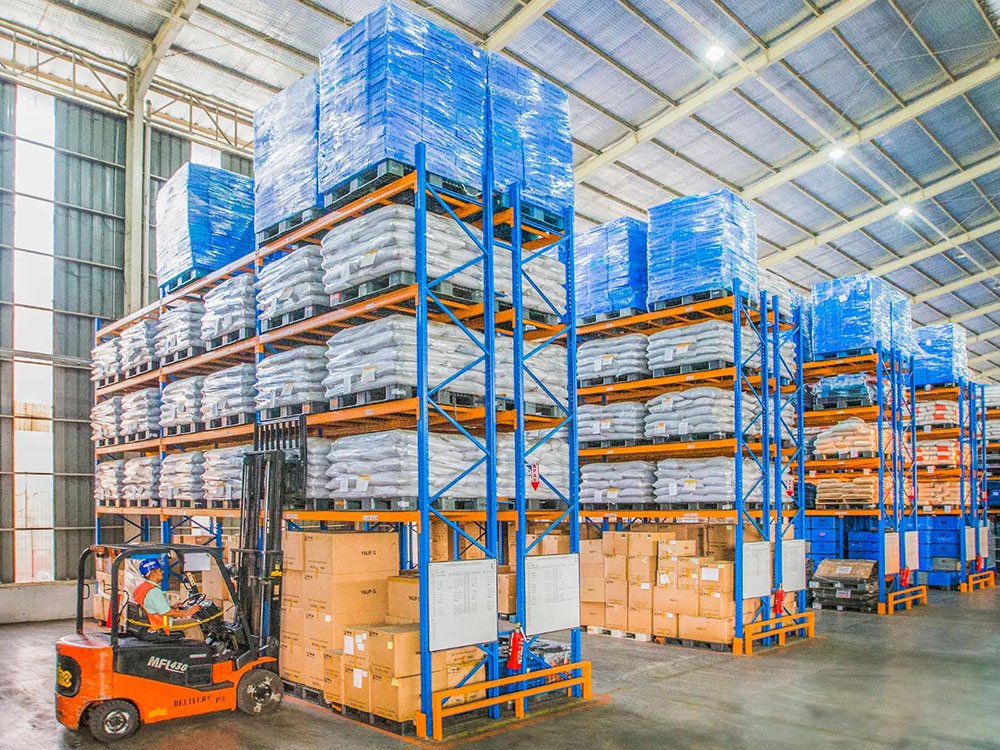
Good packaging protects the powder-coated surfaces from scratches and the steel from damage in transit, and clear labeling and documentation help installers put the system together accurately. Although it comes at the end, careful packaging preserves all the quality built into the earlier stages, ensuring the racking reaches the warehouse in the condition it left the factory.
Standards, Compliance, and Why the Process Matters
Running through every stage of manufacturing is the question of compliance with recognized standards. Racking is designed, made, and tested against structural codes that define how loads are calculated, how components must perform, and how capacities are verified. Manufacturing to these standards is what gives a load rating its meaning—it signals that the rack has been engineered and built to carry what its capacity plate claims, with a proper margin of safety.
This is ultimately why the manufacturing process matters so much to the buyer. Two racks can look nearly identical on a showroom floor, yet differ enormously in the steel grade used, the accuracy of the roll forming, the integrity of the welds, the thoroughness of the surface treatment, and the rigor of the quality control behind them. Those differences don’t show until the rack is loaded, struck by a forklift, or exposed to a humid environment over years of service—at which point a well-made rack performs and a poorly made one fails.
When evaluating a racking supplier, it’s worth looking past the price tag to the process behind the product. A manufacturer that engineers to recognized standards, sources verified steel, runs precise roll-forming and welding operations, applies proper surface treatment, and tests its products thoroughly is selling more than steel—it’s selling reliability and safety. Understanding the manufacturing journey equips a buyer to ask the right questions and recognize quality that goes deeper than appearance.
Automation and Technology in Modern Racking Production
The way warehouse racking is manufactured has steadily modernized, and the level of automation in a factory is now one of the clearest indicators of the consistency a buyer can expect. Modern roll-forming lines are computer-controlled, with the feed rate, punching intervals, and cutoff lengths set and monitored electronically. This automation removes much of the variability that once came with manual setup, so the ten-thousandth upright off a line matches the first one within tight tolerances.
Robotic welding cells have transformed fabrication in particular. A programmed welding robot applies an identical weld to every joint, with consistent heat, speed, and bead placement that a human welder simply cannot match across thousands of repetitions. This matters enormously for a structural product, because the weld at a beam connector or a brace joint is exactly where strength is won or lost. Automated handling between stages also reduces the risk of parts being scratched, mismatched, or damaged as they move through the factory.
Beyond the machinery itself, manufacturers increasingly use digital design and production data to tie the whole process together. CAD models feed directly into forming and cutting equipment, reducing the chance of transcription errors, while production tracking links each batch back to its steel certificates and quality records. The cumulative effect of this technology is racking that is more consistent, more accurately dimensioned, and more reliably load-rated than what less automated production can achieve. When a system goes together cleanly on site and carries its rated load with confidence, much of the credit belongs to the precision of the factory that built it.
Sustainability and Material Efficiency
Modern racking manufacturing also gives growing attention to material efficiency and environmental impact, and these considerations increasingly overlap with quality. Steel is the dominant material in racking, and it is highly recyclable, so the industry sits within a well-established recycling loop—offcuts and end-of-life racking can be melted down and returned to production rather than discarded. Manufacturers that minimize scrap during slitting, forming, and cutting both reduce waste and use their raw material more efficiently, which keeps costs and environmental footprint in check.
The shift to powder coating reflects this trend as well. Because powder coating uses no solvents and produces very little waste—overspray can often be reclaimed and reused—it is a cleaner finishing process than traditional liquid painting, with lower emissions. Designing racking that achieves its required strength with the most efficient use of steel, rather than simply adding material, is another form of efficiency that good engineering delivers: a well-engineered profile carries its rated load without wasting steel.
For buyers, these factors aren’t only about environmental responsibility. Efficient material use and durable finishes also signal a manufacturer that controls its process tightly, and a rack built to last and to resist corrosion serves longer before it ever needs replacing—the most fundamental form of sustainability there is.
Conclusion
The warehouse racking manufacturing process is a chain of precise, interdependent steps, and the strength of the finished system depends on every link. It starts with sound engineering and verified steel, takes shape through accurate roll forming and punching, gains its structure through strong welding and fabrication, earns its durability through proper surface treatment and powder coating, and proves itself through disciplined quality control and testing—before being packaged to arrive ready for safe installation.
For a warehouse owner or designer, the lesson is clear: the racking that will hold your inventory, protect your team, and serve your operation for years is the product of dozens of decisions made long before it arrives on site. Appreciating how that racking is made is the best way to choose a system you can trust under load, day after day, for the full life of your warehouse.